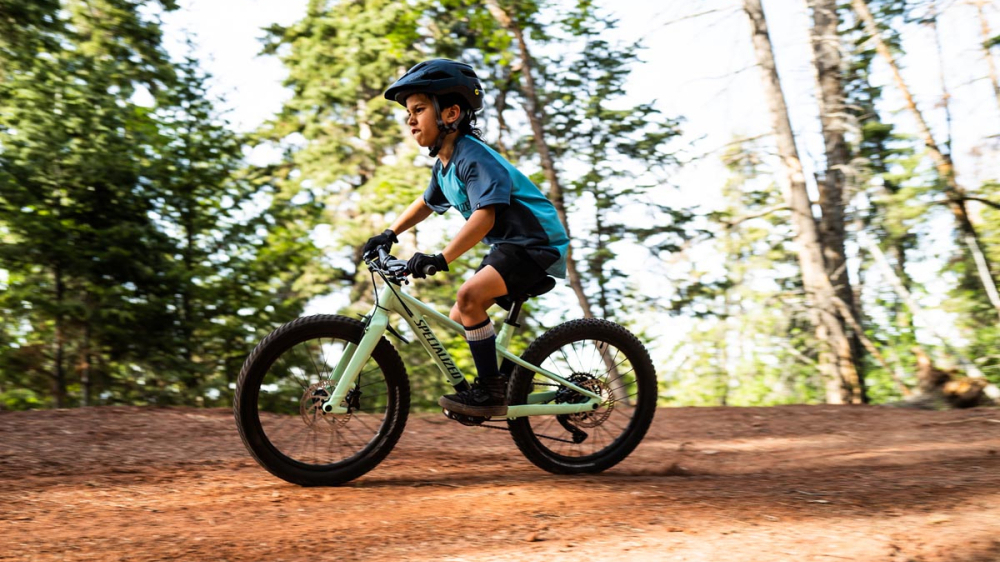
Sometimes parents say that children eventually learn to ride a bike “on their own.” While that idea sounds appealing, in reality the learning process often requires patience and time from both parents and children. From experience, we’ve found that learning to ride a bike is most enjoyable and effective when it happens through play, without time pressure or comparison with peers. A fun learning process is the path to an active childhood and a lifelong love of cycling.
In this guide, we’ll explain the balance method – an approach that makes learning easier and helps children naturally understand balance before moving on to pedaling when they are ready.
Balance Bike or Training Wheels?
Fifteen to twenty years ago, learning to ride a bike almost always meant buying a bicycle with training wheels. Today this method is gradually losing popularity. The reason is simple: training wheels create the illusion of stability, but they don’t actually teach a child how to balance.
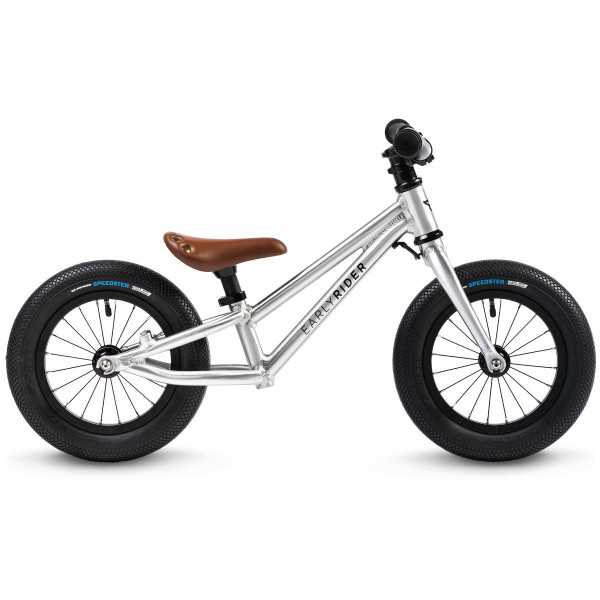
It is much easier to develop this skill by starting with a balance bike (or a regular bike without pedals). It allows children to naturally develop their sense of balance: they begin by pushing themselves forward with their feet, then move on to gliding, and eventually learn to maintain balance even while turning. At the same time, they develop steering skills, coordination and spatial awareness. Once these abilities are mastered, transitioning to a pedal bike becomes much easier – the only new task left is learning how to pedal.
The Right Age and Child’s Readiness
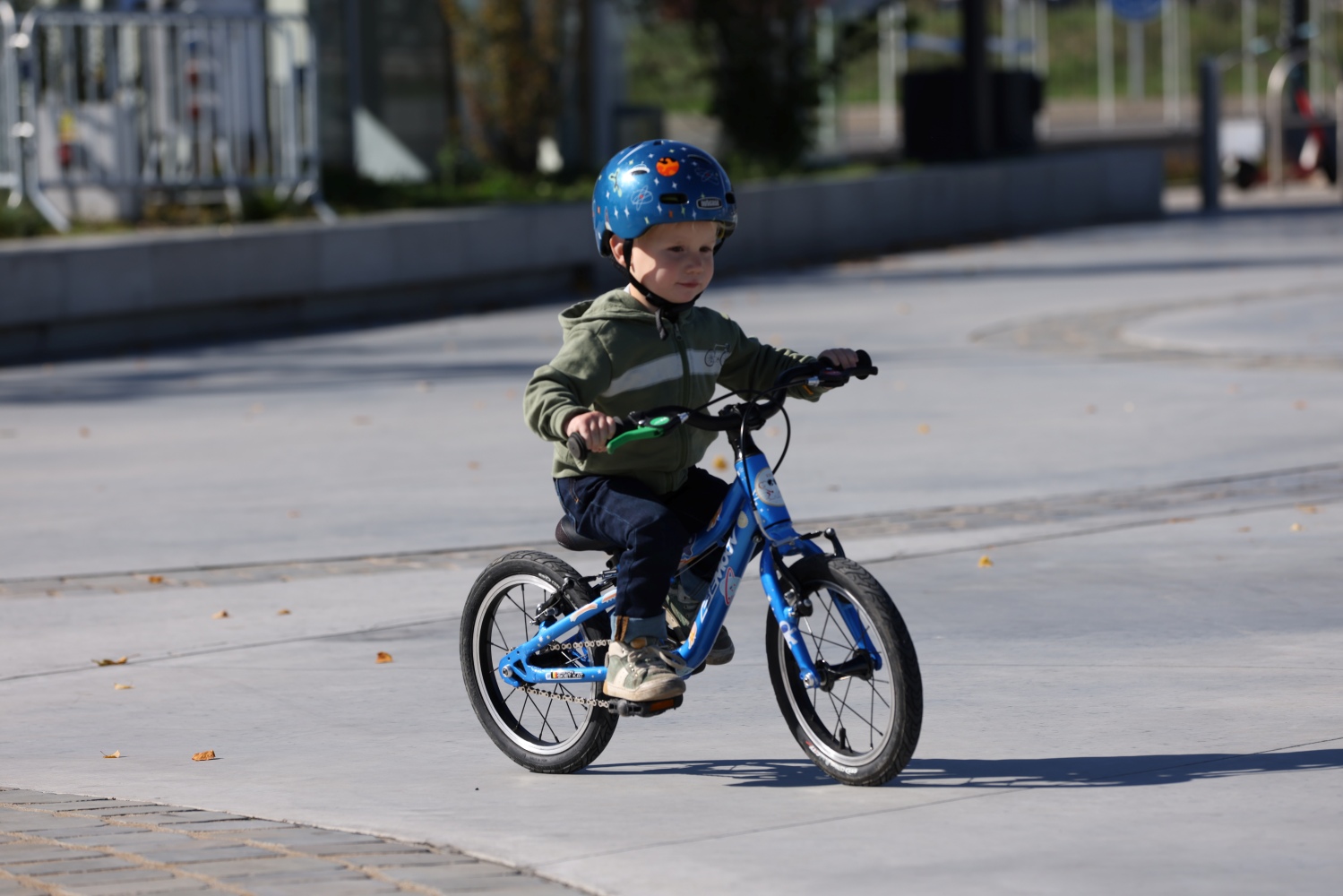
Every young rider learns to ride a bike at their own pace. Some children confidently hop onto the saddle earlier, while others need more time to get comfortable and curious about the experience. Giving your child the time they need preserves the joy of discovery, and sooner or later the desire to ride alongside others will appear naturally.
Older children often learn faster because their coordination and reactions are already more developed. However, younger children can also make great progress when the learning process feels like a game. Your role as a parent is to observe and support. Instead of focusing on age, pay attention to motivation: is the child curious to get on the saddle? Do they still want to try again after falling once? If the motivation is there, learning will progress smoothly. If not, it may be best to put the bike aside for a while.
Preparation: What Do You Need to Start?
You don’t need much to begin learning. The most important things are a safe bicycle in the correct size, a quality helmet and comfortable shoes. If you want your child to feel more confident, knee pads, elbow pads and cycling gloves can also be very helpful.
Choosing the Right Bike: Weight and Geometry
The right bike size makes learning significantly easier. A properly sized and well-built bike won’t feel too heavy. Otherwise, it will be harder for the child to start moving, stop or make turns. While occasional falls are normal, repeated frustration may reduce the child’s motivation to continue learning.
For this reason, it’s best to choose a lightweight bike with child-friendly geometry: comfortable handlebars, an easily adjustable saddle and a low frame that makes mounting easy. For our customers we most often recommend Bemoov and Early Rider models – they are lightweight, ergonomic and designed so that children can control them easily.
If you already have a bike with pedals and prefer not to invest in a balance bike, you can temporarily remove the pedals at the beginning of the learning process. This essentially turns it into a balance bike with larger wheels. Once the child masters balance, simply reinstall the pedals.
Safety Equipment: Helmet and Protection
According to Lithuanian law, wearing a helmet is mandatory for cyclists under the age of 18. Even when practicing in an empty parking area at slow speeds, a fall can lead to hitting the head on hard ground. A helmet absorbs much of that impact and helps prevent injuries. Ideally, a helmet should be lightweight, comfortable and easy to fasten. For additional protection, consider models with a MIPS system, which helps reduce rotational forces that can affect the brain during impact.
Proper footwear is also important. Closed, sturdy sports shoes work best. Make sure the laces are short or secured so they cannot get caught in moving parts. Lightweight trainers provide good grip both when pushing off the ground with a balance bike and later when pedaling. To make early falls less intimidating, we also recommend knee pads, elbow pads and gloves.
Choosing the Right Practice Location
A good training location gives your child a confident start. Choose a place without car traffic, crowds or excessive noise. A smooth asphalt area in a park, an empty schoolyard or a quiet stadium are ideal options. Make sure there are no steep slopes, high curbs or distractions such as running dogs or scooters. The calmer the environment, the easier it will be for your child to focus on learning how to ride.
Learning to Balance (Without Pedals)
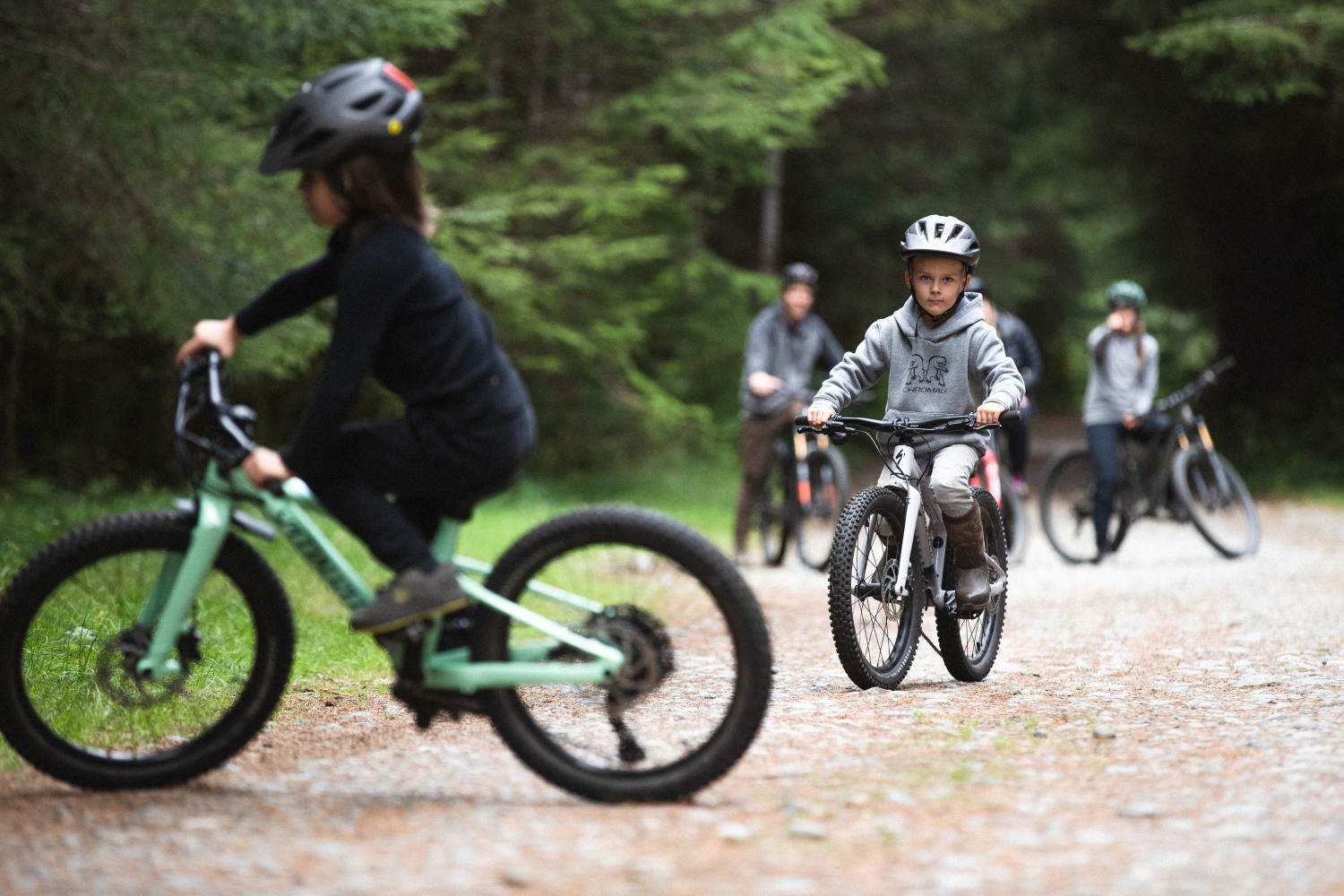
Once you are prepared, it’s time to start practicing. Below are the key steps of the balance method that help children learn to ride more naturally:
- Sitting on the saddle and pushing off with the feet. Encourage your child to keep their body weight on the saddle rather than standing on their feet. When a child constantly stands on the ground while holding the bike between their legs, they tire quickly and do not learn balance. Sitting down allows them to push off and glide naturally.
- Looking forward. Beginners often look down at the front wheel or their feet because it feels safer, but balance is easier to maintain when looking ahead. Sometimes simply pointing out a distant tree or object helps children lift their gaze.
- Gliding. Once the child is confident pushing off, encourage them to glide like on a scooter – push harder and lift both feet for a few seconds. At first this may last only a moment, but gradually the glide will become longer and more stable.
- Turning. At this stage it’s important not to rush. Start with wide and gentle turns instead of sharp maneuvers. When the child becomes more confident, you can set up a small course using cones. Remember that at this stage the saddle should remain low so the child can still reach the ground easily.
Once the child can glide, turn and stop without fear, they are already very close to riding a bike – the only step left is adding pedals.
Learning to Pedal
Once balance is mastered, learning to pedal becomes much easier. Most of the work has already been done – now it’s simply about combining balance with movement.
- Saddle height. If the saddle was lowered while practicing balance, it should now be raised slightly. Ideally, when sitting on the saddle the child should reach the ground with their toes rather than the full foot. This allows the legs to extend better while pedaling and makes pedaling more efficient. At the lowest pedal position the leg should remain slightly bent rather than completely straight.
- Pedal position for starting. Starting becomes easier when one pedal is positioned slightly higher and forward. This allows the child to generate enough momentum with one strong push.
- Independent start. Once the child confidently pedals, it’s time to learn how to start independently. Ask the child to push off strongly with one foot while pressing the raised pedal downward with the other. Momentum helps stabilize the bike and makes balancing easier.
- Stopping. Children should learn to brake early rather than at the last moment. If the bike has hand brakes, practice calmly: slow riding, gentle braking and controlled stops. The child should feel fully in control.
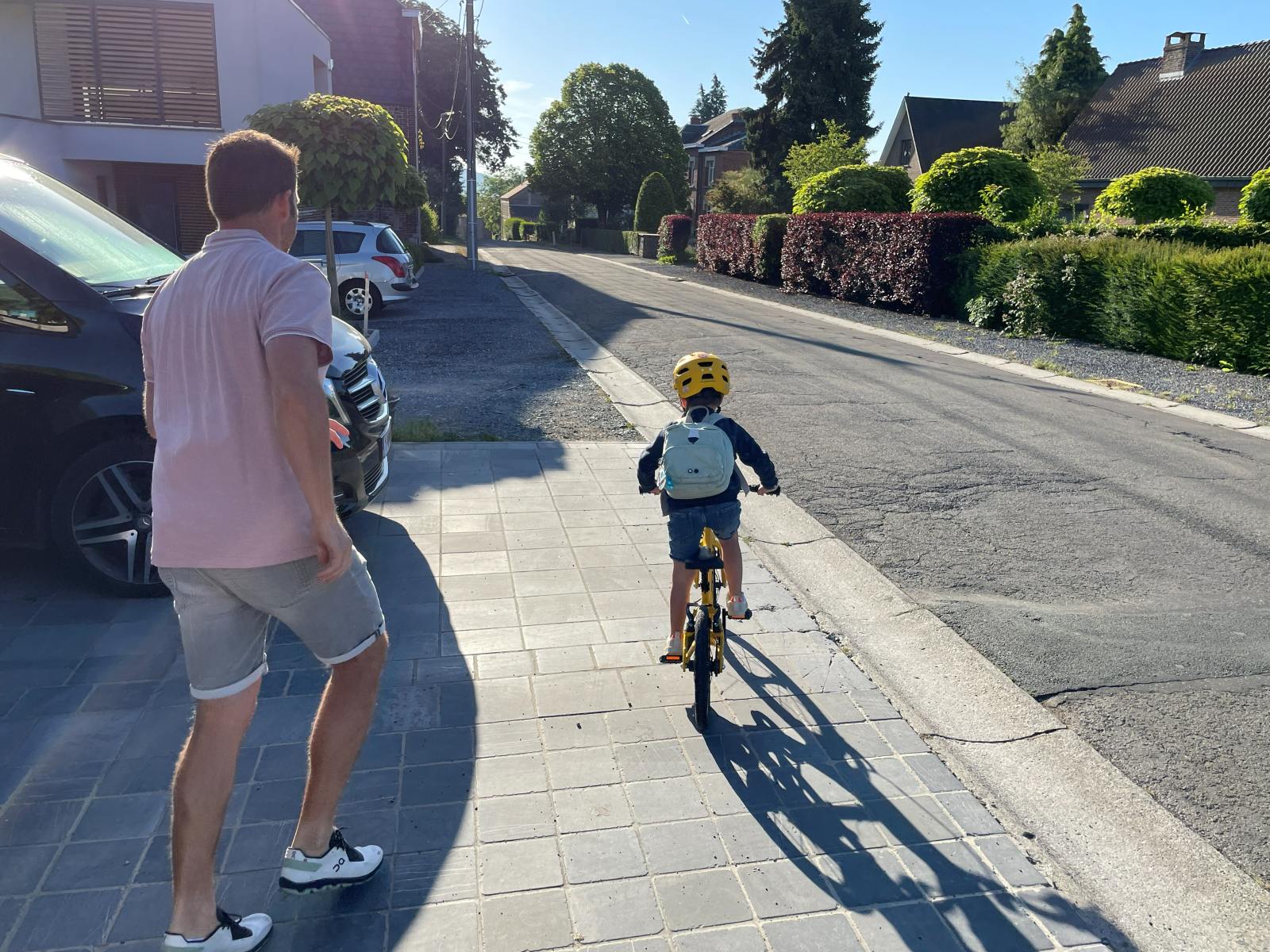
- Helping without holding. Avoid constantly holding the saddle or handlebars. This creates a false sense of security and prevents the child from feeling how the bike naturally moves. Instead, run alongside and be ready to catch them if needed, but allow them to develop balance independently.
Finish the process with encouragement. Instead of general praise like “you’re riding so well,” focus on specific achievements: “great turn,” “excellent stop,” or “nice start.” Children benefit from recognition of their effort, not only the final result.
FAQ: Common Questions
At what age should children start?
Most children start using a balance bike between 1.5 and 3 years old and usually learn to pedal between 4 and 6 years old. However, these are only guidelines. Learning without pressure almost always leads to faster progress.
How long does the learning process take?
If a child already confidently rides a balance bike, switching to pedals can sometimes take just one afternoon. If balance and confidence still need development, learning may take several weeks. We recommend short practice sessions of around 10–20 minutes. The most important thing is that the process remains enjoyable rather than exhausting.
What if the child is afraid of falling?
The first step is reducing risk and fear. Protective gear (knee pads, elbow pads and gloves), softer surfaces and slower practice sessions can help. If the child falls and gets scared, acknowledge their feelings instead of dismissing them. Encourage them gently: “I see that scared you, but your protection kept you safe. Let’s take a short break and try again.”
Should you hold the bike while the child rides?
If you want to help, hold the bike briefly during the start. Holding the handlebars prevents the child from learning proper steering, while holding the saddle can create a false sense of security. The best approach is to stay nearby and be ready to catch them if necessary, while allowing the child to learn balance independently.

 Gifts
Gifts Discounts