The cold season doesn’t have to be a reason to say goodbye to your e-bike until spring. With the right preparation, you can use an electric bike even in sub-zero temperatures. In this guide, you’ll find everything you need to know before riding an e-bike in winter – from battery care to safe riding on snow and ice.
Can you ride an electric bike in winter?
Yes, you definitely can. Although the cold season comes with some challenges – the battery discharges faster in low temperatures, road surfaces can be slippery, and a mix of salt and dirt finds its way into every gap of the bike – with proper preparation, using an electric bike is completely safe. Before heading out onto frosty streets, you should check the battery, fit suitable tyres and make sure you are clearly visible in the dark.
E-bike battery care in winter
In winter the battery becomes the most sensitive part of your electric bike. Cold reduces its capacity, so your range can drop by as much as 20–40%. While you can’t completely avoid this loss, proper care will help minimise the negative effect of low temperatures.
- Keep the charge at 40–60% when the bike is not in use. At low temperatures, fully charged lithium-ion batteries age faster, so when the bike is stored, it’s best to keep the charge in the middle range.
- Avoid fully discharging the battery. In cold weather the charge level drops to zero more quickly, and a full discharge is what damages the battery the most.
- After riding, bring the battery indoors, even if the bike stays outside. Don’t charge it immediately. Wait 1–2 hours until it warms up to room temperature – this helps prevent internal damage. Ideally, the bike should also be stored in a dry, warm and well-ventilated room rather than outdoors.
How to maintain the right battery temperature?
Keeping the battery warm in winter is one of the most important conditions for maintaining a normal riding range. You should look after its temperature both before and during your ride.
When the bike is not in use, keep the battery in a warm room. If it is removable, it’s best to store it at room temperature and keep the bike itself in a dry indoor area. If the battery is integrated into the frame, the bike should be stored in a heated space during winter.
While riding, we recommend using neoprene or thermal battery covers – they protect against cold and moisture.
Riding safely on snow and ice
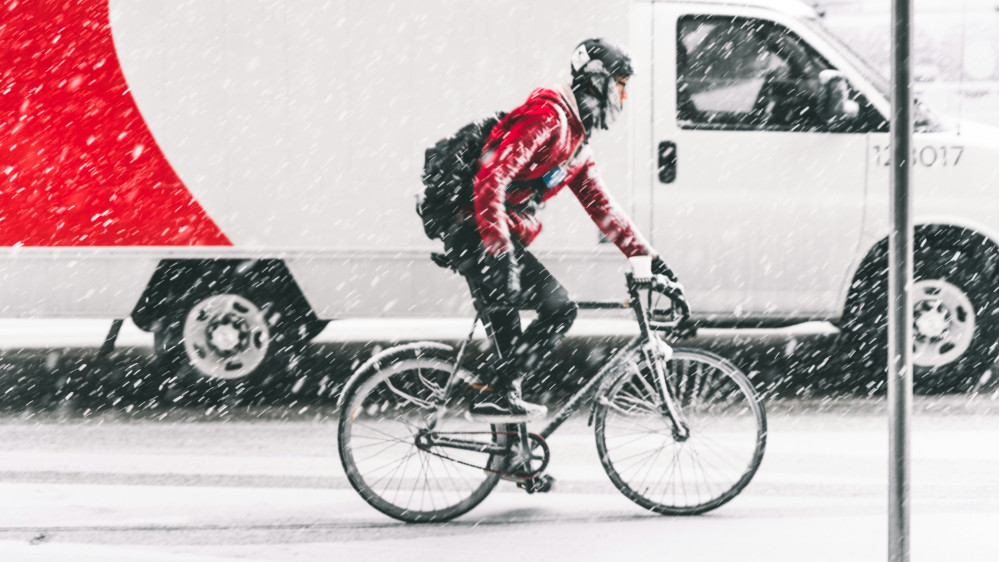
In summer we’re used to riding an e-bike fast and with little effort, but in winter the pace has to come down. When the roads are covered with snow or patches of ice, stability and safe manoeuvring become far more important than speed. That’s why in winter it’s worth riding slower, braking more gently and avoiding sharp turns.
If your local roads are often icy and poorly maintained, studded winter tyres can be a real lifesaver – they significantly improve grip. In the city, winter tyres without studs but with a more aggressive tread pattern are usually enough. They work better on cleared roads, but still provide extra traction and reduce the risk of unexpected slips.
Proper winter clothing
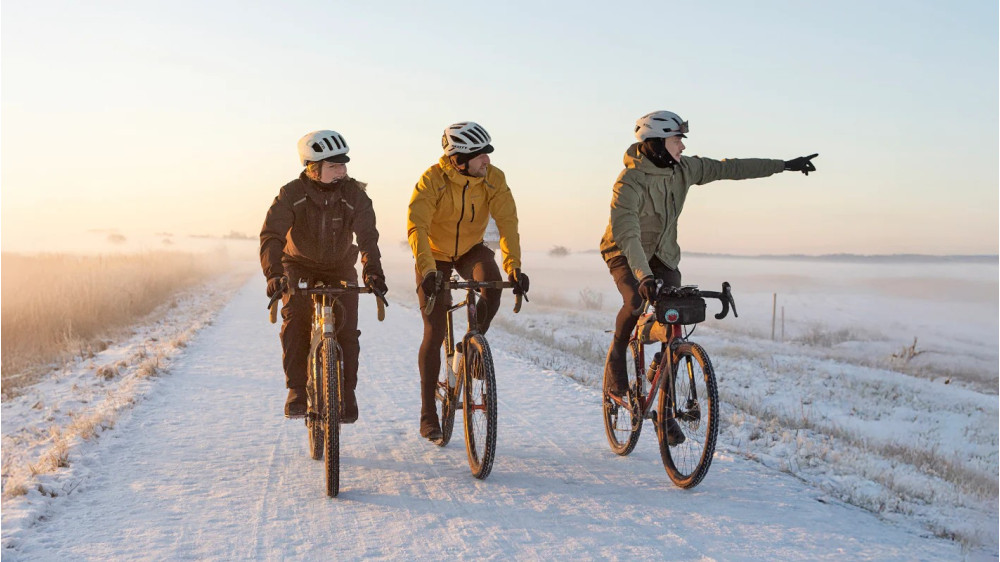
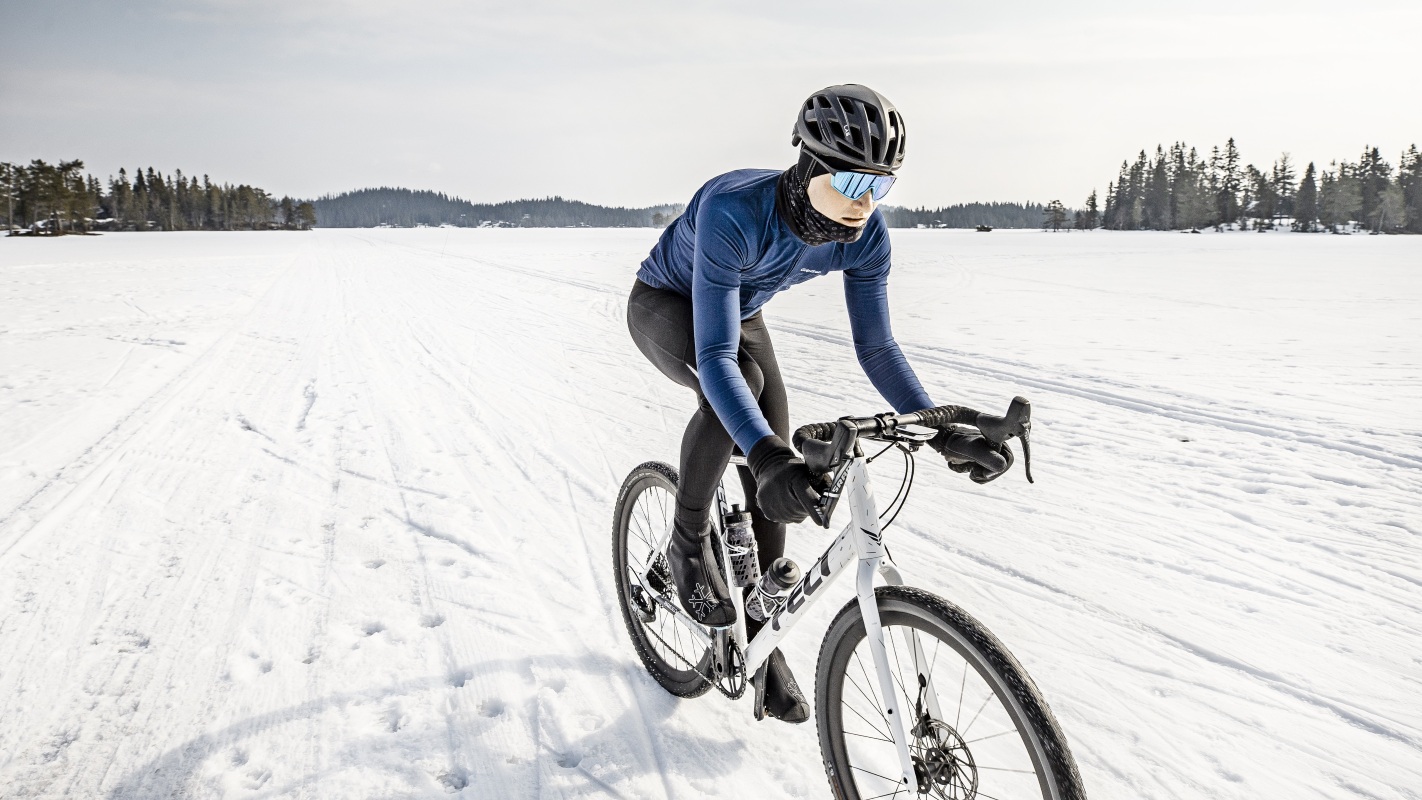
In winter you want to ride in a way that keeps you from getting cold or soaked. The easiest way to achieve this is a simple layering system:
- GRIPGRAB – merino wool base layer (keeps you warm even when damp);
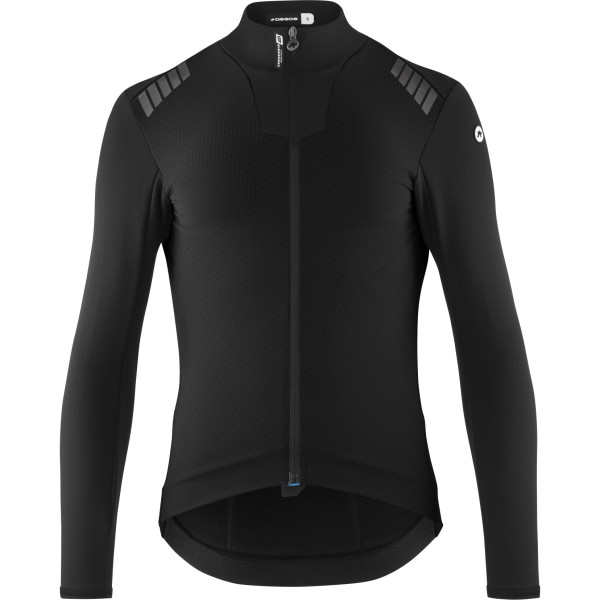
- ASSOS THERMOBOOSTER P1 – warm, breathable mid layer (maintains a comfortable temperature);
- ASSOS TRAIL WINTER – waterproof and windproof jacket (protects you from harsh weather).
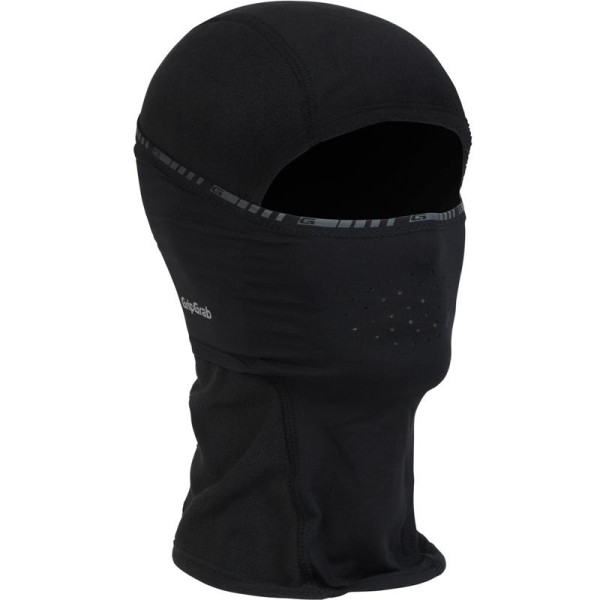
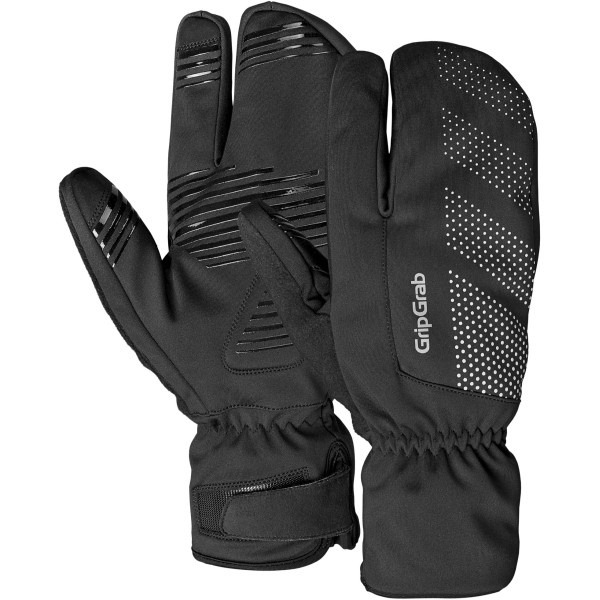
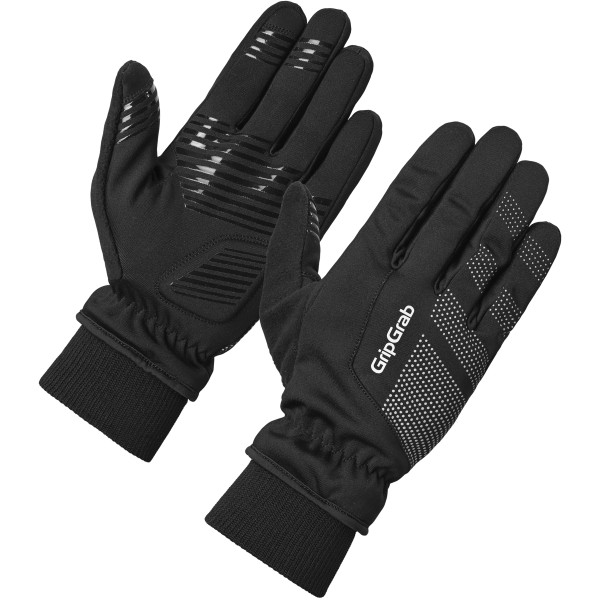
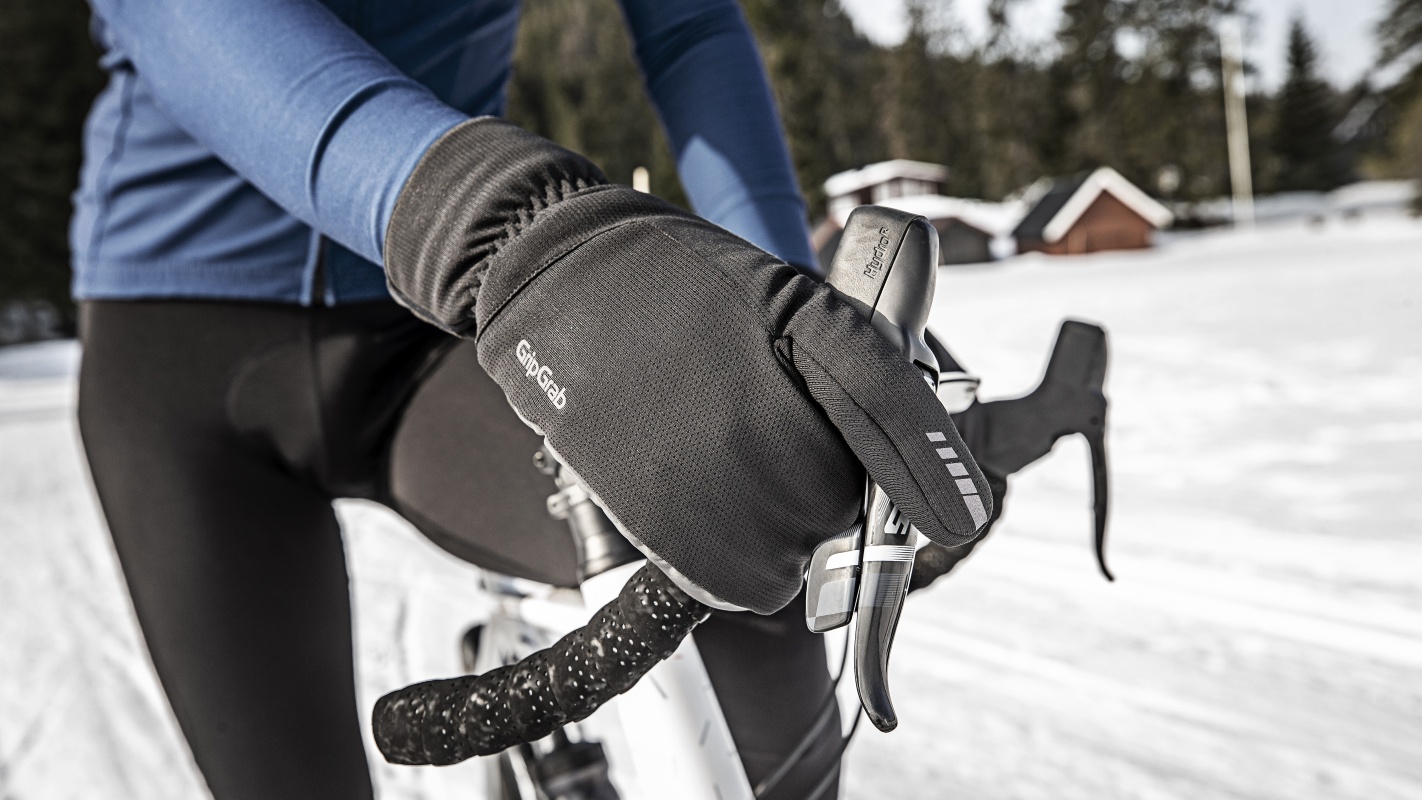
Accessories are also very important. Under your helmet, a GRIPGRAB THERMO WINDPROOF WINTER cap keeps your ears warm, while your hands are best protected with warm yet flexible GRIPGRAB RIDE WINDPROOF WINTER gloves that allow easy control of brakes and gears. For your legs, GRIPGRAB RIDE THERMAL tights are ideal – they help retain warmth while still allowing your skin to breathe.
Be visible: the importance of lights in winter
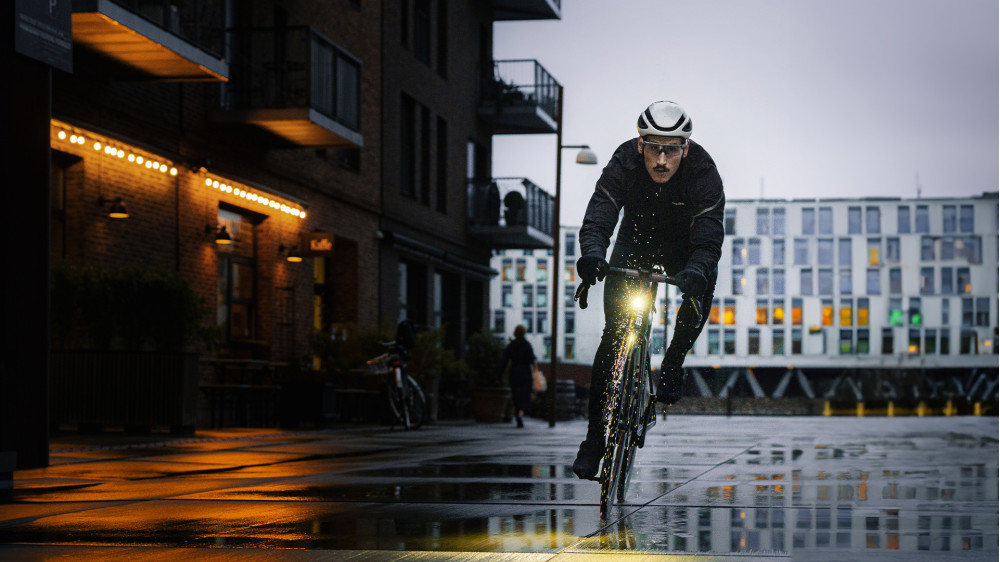
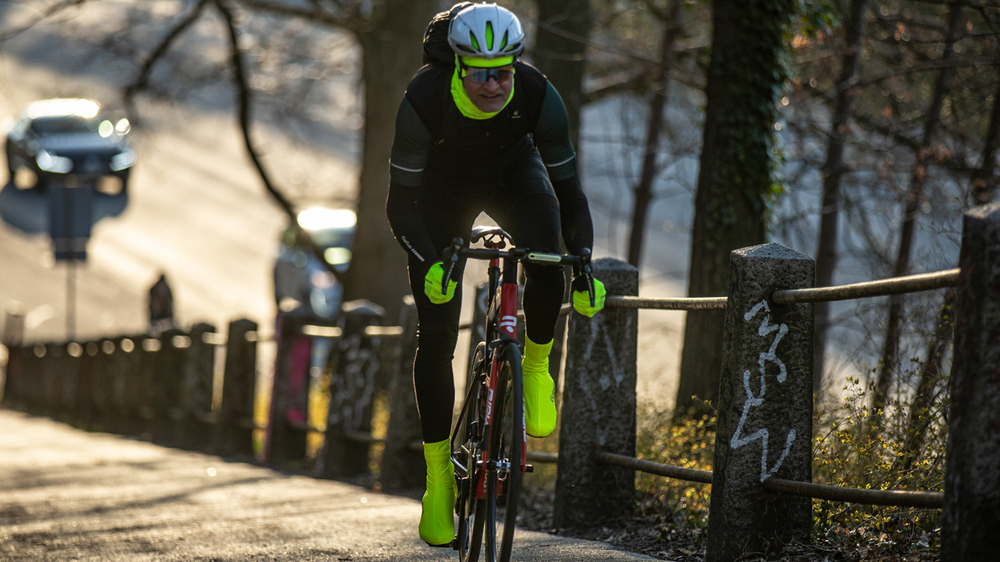
In winter it gets dark much earlier, so your lights affect not only how well you see but also how well you are seen. Use powerful lights at the front and rear so that you are clearly visible to both drivers and pedestrians. A helmet-mounted light is a great addition. Because it moves with your head, you see better in turns and people can more easily understand where you’re going.
If you want to stand out even more, use flashing modes – they are easier to notice in the sea of other lights.
Winter bike accessories: mudguards, tyres, bags
A bike prepared for winter needs specific equipment to ensure safety, grip and comfort. The first thing to sort out is mudguards. Longer mudguards protect not only your clothing but also your bike components from dirt and road salt.
The next key element is tyres. If you often ride on ice or poorly maintained roads, studded winter tyres will provide the greatest stability. In urban conditions, winter tyres without studs but with a more aggressive tread are usually enough. Some riders choose all-round tyres and simply lower the tyre pressure – this increases the contact patch and grip on slippery surfaces.
- Studded – maximum grip on ice.
- Winter tyres without studs – excellent grip on snow.
- All-round tyres with reduced pressure – suitable for city use if the roads are regularly cleared.
For carrying your belongings, it’s best to use waterproof panniers or a backpack, as this is the only way to be sure your items won’t end up soaked by snow or rain.
E-bike cleaning and maintenance in winter
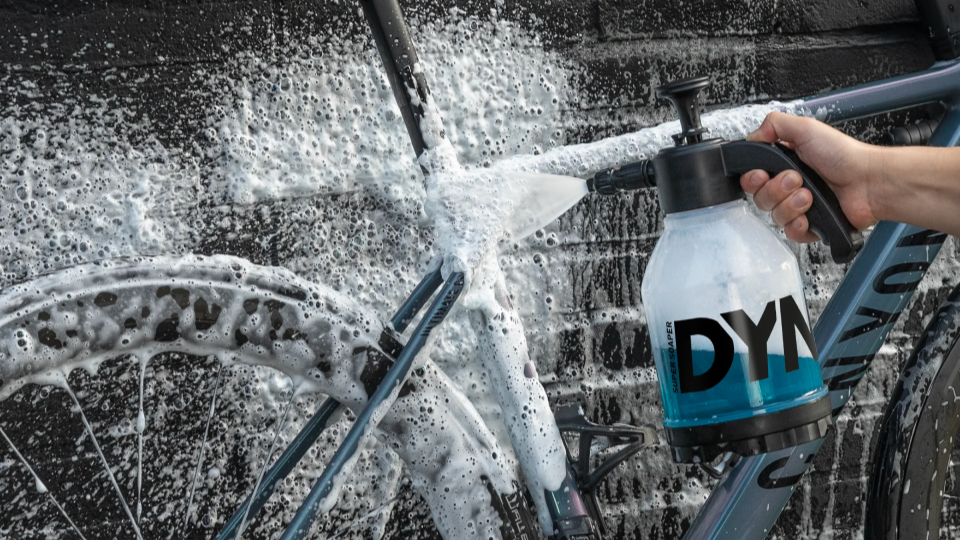
In winter your bike is under more stress than in summer – salt, dirt and melting snow quickly build up on the frame and chain. That’s why it’s worth giving the bike at least a quick wipe-down with a damp cloth after every ride – a small habit that significantly extends the lifespan of your components. After wiping, dry the frame and chain – moisture lingers longer in cold weather, and that’s the quickest route to rust.
Your choice of chain lube should also be seasonal. For winter, “wet” or “all-weather” lubes are the best option, as they stay on the chain much longer even in wet conditions.
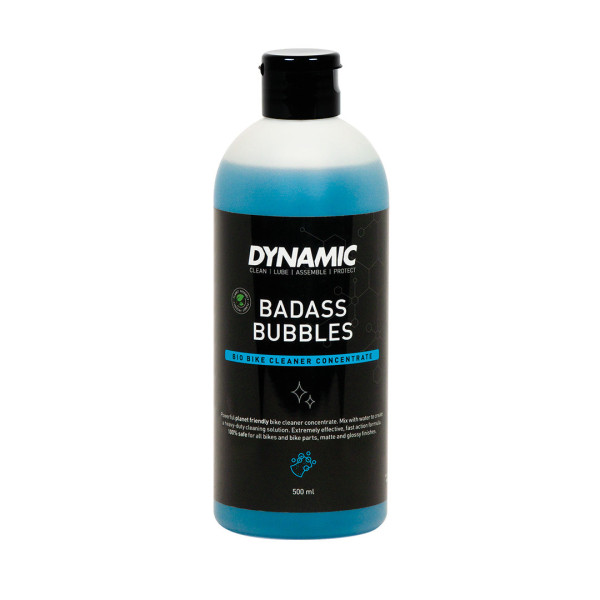
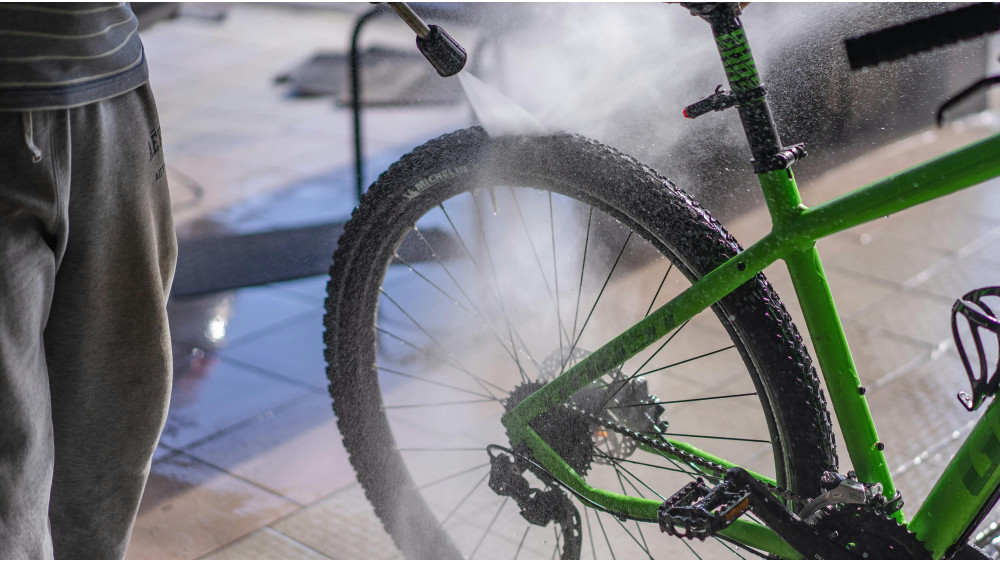
Once a month, we recommend a more thorough wash. Two rules are crucial here: always remove the battery before washing and never use high-pressure water, so it doesn’t get into the motor or bearings.
How to transport an e-bike in winter
When transporting an electric bike in winter, the main goal is to protect the battery and electronics from cold and moisture. Before loading the bike onto the rack, first remove the battery and place it inside the car. This protects it from large temperature swings that can shorten its service life. Cover the bike itself with a protective cover so that salt, dirt and slush don’t hit it while driving, but make sure your car’s lights remain uncovered.
Once you arrive, don’t rush to reinstall the battery. First, wipe off any moisture and snow, and ideally leave the bike and battery in a warmer room for a short while so the metal and electronics can warm up. This simple routine can significantly extend the life of both your bike and its battery.
Storing your e-bike in winter if you’re not riding
If you’re taking a break and won’t be riding your electric bike over winter:
- store it indoors in a dry place at room temperature;
- leave the battery at 40–60% charge;
- check the charge level every 4–6 weeks;
- do not store the battery fully charged;
- never leave the battery completely discharged.
Conclusion: is it safe to ride an electric bike in winter?
Yes – with proper battery care, responsible riding, suitable tyres and good lights, an electric bike is a safe and practical option in winter. The season demands more preparation, but in return you get the freedom to move comfortably all year round, regardless of the weather.
If you want to prepare your bike properly for winter, book an appointment online and visit the VELONOVA workshop at J. Baltrušaičio g. 1, Vilnius – we’ll take care of everything for you.
FAQ: frequently asked questions
Can you charge an e-bike battery immediately after bringing it in from the cold, or should you wait until it warms up?
No. Wait at least 1–2 hours until the battery warms up to room temperature. Charging a cold battery increases the risk of damage.
In what conditions is it better not to ride (blizzard, black ice, sleet)?
We recommend not riding in black ice conditions, blizzards, heavy sleet or whenever visibility is less than 20 m.
Which winter tyre strategy should you choose: studded, non-studded winter or all-round with reduced pressure?
- Studded — if you often ride on ice.
- Winter tyres without studs — if you mostly ride on snow.
- All-round tyres with reduced pressure — for cleared city streets.
How do you protect electrical connections, sensors and the motor area from salt and moisture?
After every ride, wipe off salt with a damp cloth, don’t let it accumulate, and never use high-pressure water when cleaning, so it doesn’t get into electrical connections.

 Gifts
Gifts Discounts