Inflating a bicycle tire seems like one of the simplest maintenance tasks. However, even here you can run into problems – especially when you need to connect a pump to the tire. With a conventional pump, most problems occur when the pump head is connected to the valve. Depending on the valve type, you need to unscrew it, position the head correctly and screw it on (or lock it with a lever). If the head is attached incorrectly, it may leak air or come loose. And making a mistake is extremely easy, especially if you are wearing gloves.
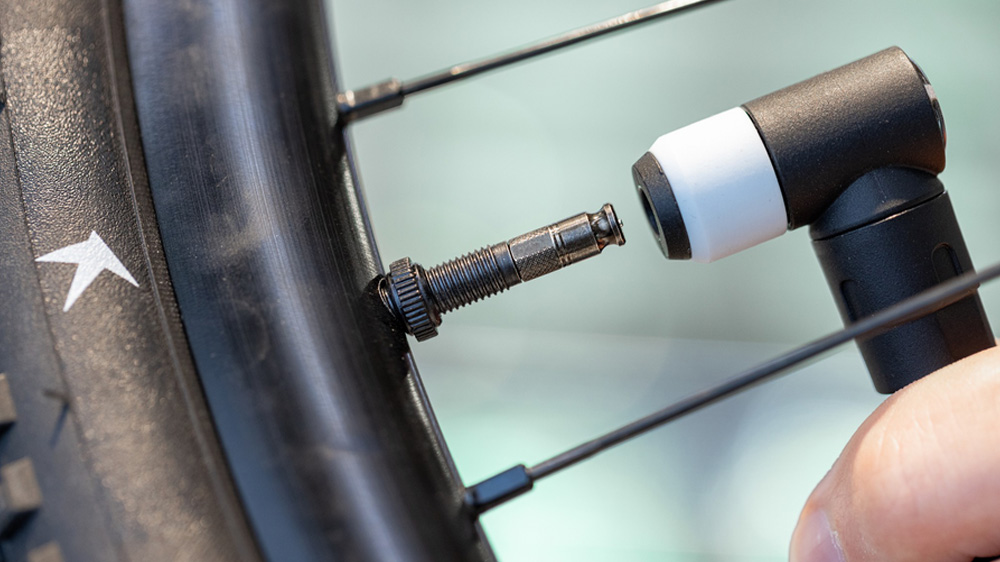
If this headache is all too familiar to you – Schwalbe hopes to solve it with the new “Clik Valve” system. It can be adapted to different bicycle valves, and when connecting the pump there is no longer any need to screw on or lock the pump head. Simply press the pump on until you hear a click (which is where “Clik” comes from!)
The system allows different valve types to be converted, while Schwalbe promises extremely simple connection, greater airflow, and a completely airtight seal. But does Clik solve this problem once and for all – or do the new components bring new problems with them?
What problem does “Schwalbe Clik Valve” solve?
Schwalbe provides one convenient standard that allows tires with several different valve types to be inflated using a single system. Today, bicycles mainly use three types of valves. Presta (marked SV) is a narrow valve found on road, gravel and other sport bikes. Dunlop (marked DV) is most commonly found on touring and city bikes. Schrader (marked AV) is wider and is used not only for bicycle tires but also for car tires.
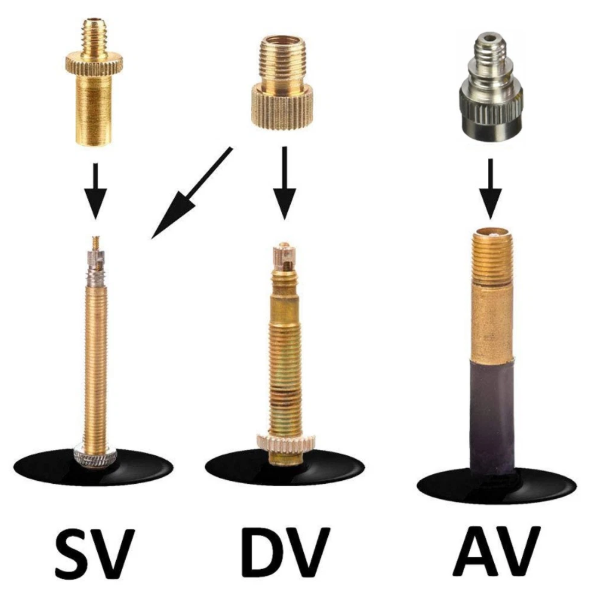
Different types of bicycles also mean different valves – and more equipment is required. One pump may need a dual head, another may require an adapter, and when inflating different wheels you often have to remember exactly how to attach the pump to each valve.
However, even with the correct head, using it is not always convenient. Depending on the pump, it needs to be screwed onto the valve or locked with a lever. If the pump is attached even slightly incorrectly, you often have to deal with poor sealing and air escaping around the sides.
The idea behind “Clik Valve” is to simplify all of this. Instead of screwing on the head or locking it with a lever, you simply press it onto the valve – it locks automatically and confirms this with a click.
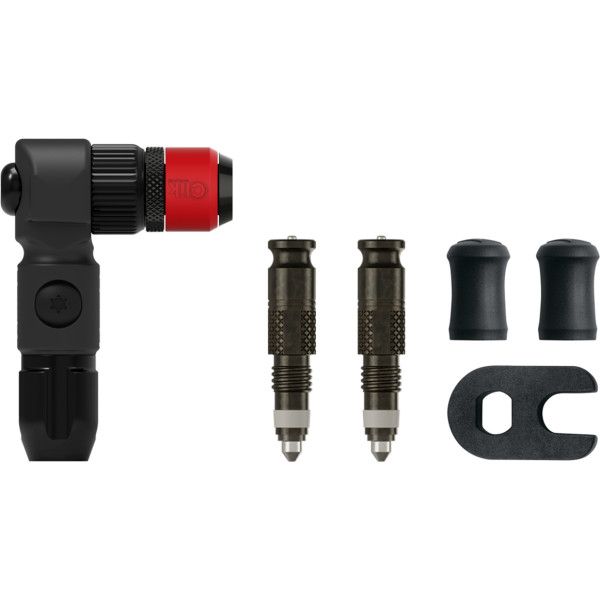
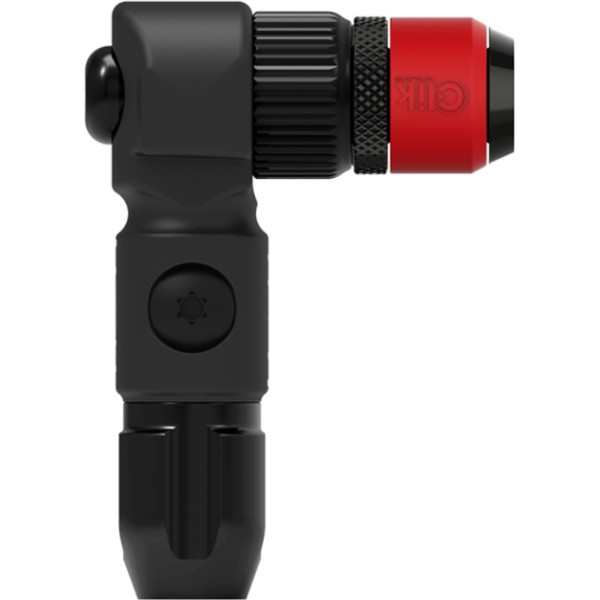
Schwalbe offers conversion kits for different valve types. In addition, you will also need to convert your pump – compatible fittings designed for the “Clik Valve” system are available for this purpose.
This way, your different types of bicycles can now have exactly the same valve and use one pump suitable for inflating all of them.
This is an attempt to create an entirely new ecosystem – and “Clik Valve” should be viewed not as just another new valve standard, but as a new way to connect a pump to the tire of any of your bicycles.
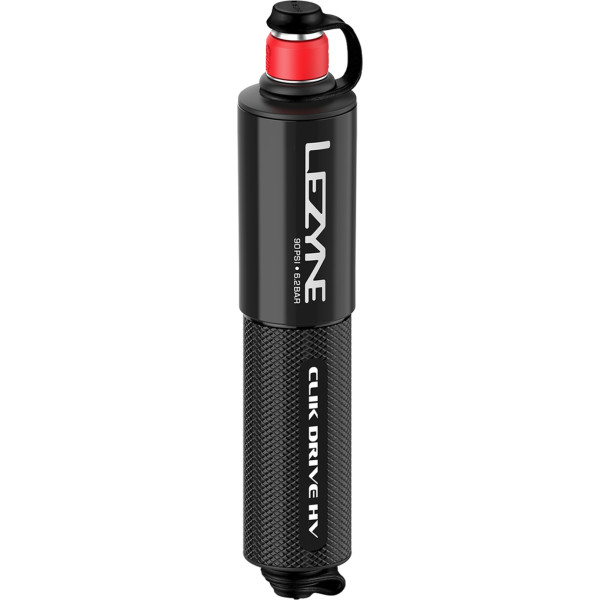
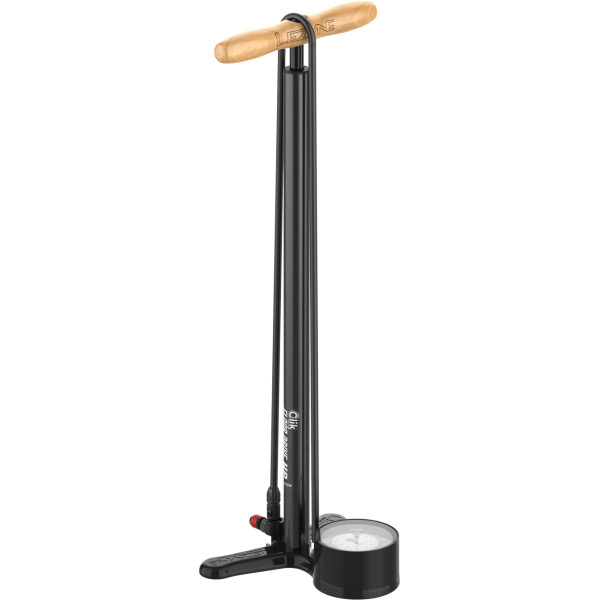
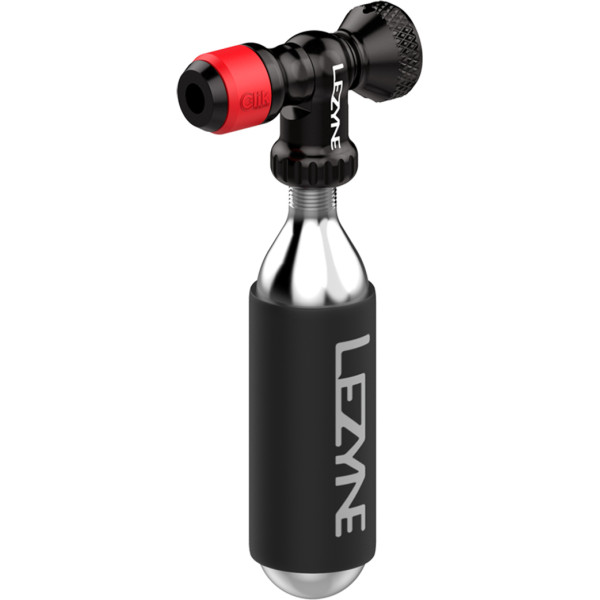
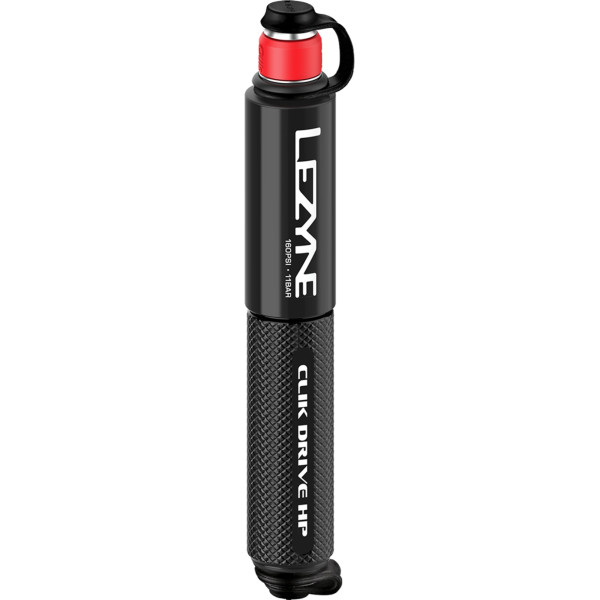
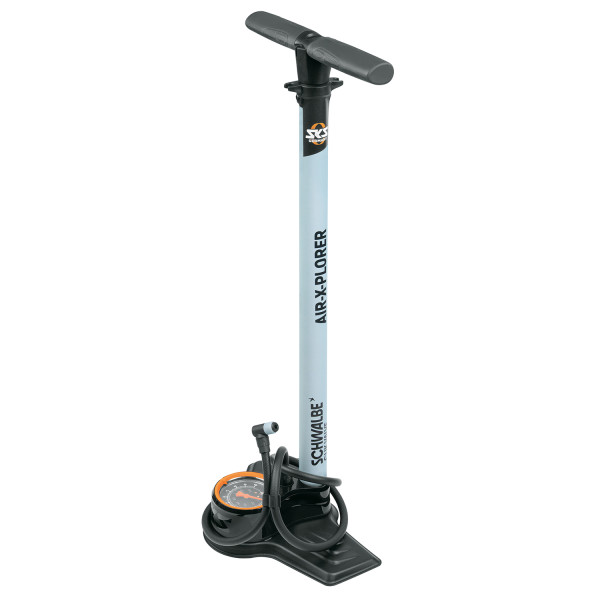
At the Velonova online store, you can currently also purchase “Clik” bicycle pumps. You will also find accessories from manufacturers such as SKS and Lezyne – as well as high-quality “Clik” bicycle inner tubes in different sizes, so you can easily prepare your bicycle for use with this system.
How does “Schwalbe Clik” work?
“Clik Valve” consists of two main elements: the “Clik” valve installed on the bicycle and a compatible pump head or adapter. The way these two elements connect is the key advantage of this system.
Instead of screwing the pump head onto the valve or locking it with a lever, you simply press it onto the valve. An audible and noticeable click means that the head has locked into place. Once you have finished inflating, there is no need to unscrew or release it – simply pull it off the valve.
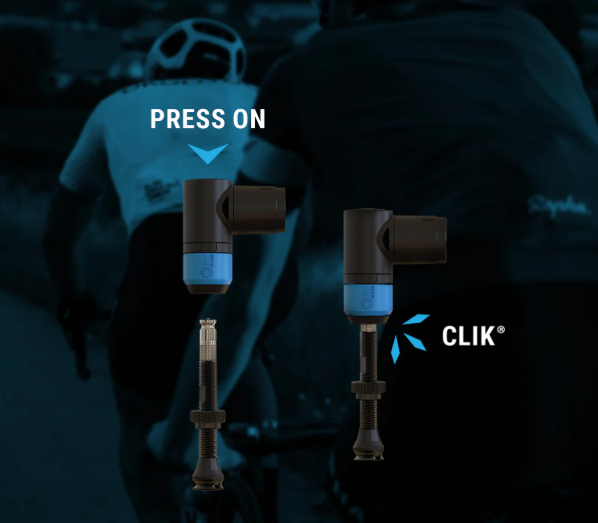
Compared with the alternatives, this process is much simpler. For example, when using a Presta valve, you need to unscrew the nut before inflating, and when connecting the pump you have to find the correct position for the head and lock it with a lever.
The main advantage of “Clik Valve” is precisely how the pump is connected to the tire. Instead of several small steps, only one remains – press the head onto the valve until it clicks.
For this clicking mechanism to work, of course, the valve and pump must first be prepared correctly. How is this done – and is the conversion easy enough to perform at home? Time to find out.
Installing “Clik Valve”: is the conversion really simple?
To start using “Clik Valve”, two parts need to be prepared: the bicycle valve and the pump. Exactly what needs to be done depends on the type of valve fitted to your bicycle.
How do you convert a “Dunlop” (DV) valve to “Clik Valve”?
This is the simplest conversion. Simply release the air from the tire and loosen the valve nut. Then remove the existing valve core and screw the “Clik Valve” core into its place. The nut only needs to be tightened by hand. No special tool is required for this conversion.
How do you convert a “Presta” (SV) valve to “Clik Valve”?
Converting SV valves is slightly more difficult because the valve core needs to be removed. After releasing the air from the tire, the old core must be unscrewed using a valve core removal tool. Schwalbe includes this tool in its conversion kit, so there is no need to buy it separately. The same tool is then used to screw in and tighten the new “Clik Valve” core.
How do you convert a “Schrader” (AV) valve to “Clik Valve”?
When converting an AV valve to the “Clik Valve” standard, nothing needs to be removed – you do not even need to release the air from the tire. The original “Schrader” valve core remains in place, and a special “Clik Valve” adapter is simply screwed onto it by hand. The adapter can later be removed if you want to use a conventional “Schrader” pump.
How do you adapt a pump for use with “Clik Valve”?
Once the valve has been converted, the second part remains – the pump. During testing, we had no problems simply fitting the “Clik Valve” adapter onto our existing pump head. The head can also be replaced with a dedicated “Clik Valve” head. So buying a new pump is not necessary – often it is enough to adapt the one you already have. However, it is worth noting that some pumps may not be compatible with “Clik Valve” adapters and heads. It is possible that switching to this system will also require you to upgrade your existing pump.
And once everything has been prepared and set up – does the “Schwalbe Click Valve” really work as well as the manufacturers of this system promise? Let’s find out!
“Clik Valve” test: how well does this valve deliver on its promises?
To avoid relying only on first impressions, we tested several of the most important “Clik Valve” promises: ease of pump connection, inflation speed, air loss, system sealing and compatibility with existing equipment. We also checked whether someone with no experience using bicycle pumps could use the system without any additional explanation.
First, we tested the most important promise of “Clik Valve” – is the pump really easier to connect? The answer is quite clear: one hundred percent yes.
You simply press the head onto the valve. It clicks and locks into place, and when removing it there is no need to unscrew or release anything. The head remains stable even if the hose is moved slightly, so both connection and pumping are simpler and faster than with a conventional head.
The difference can also be felt during inflation. Schwalbe claims that “Clik Valve” can provide up to 50 percent more airflow than a conventional “Presta” valve. In our test, pumping really did feel slightly easier, and we were able to inflate the tire to the required pressure a little faster.
However, the difference in time is not large enough to claim that we inflated the tire twice as fast. Most of the time was saved because of faster pump head connection and removal, rather than the airflow itself.
We also checked air loss. When connecting the pump, a small pressure drop still occurs – around 0.1 PSI. However, it is worth mentioning that this is not a leak through the valve. When the pump is connected, some air simply enters the head and hose.
Much more important is what happens when the pump is removed. Absolutely nothing happens: and that is the biggest advantage. “Clik Valve” closes immediately when the pump is removed, so after inflation the pressure in the tire remains practically unchanged. This means there is no longer any need to slightly “overinflate” the tire, expecting that some air will be lost when removing the pump.
During the testing period, we also did not notice “Clik Valve” holding air any worse than a conventional valve. We observed no additional leakage that would raise doubts about the system’s sealing.
Will “Clik Valve” work with my pump?
Whether “Clik Valve” will work with your existing pump depends on its head. Some pumps can be adapted using a “Clik Valve” adapter or by replacing the head, but not all are compatible – for example, screw-on “Presta” heads simply do not work.
On the other hand, the “Clik Valve” can still be inflated with a conventional clamp-on “Presta” or “Dunlop” pump, so do not rush to throw your old pump into the recycling bin – it can still be useful as a backup. However, when using a conventional pump, pressure measurement may not work. To take full advantage of “Clik Valve”, it is worth using a compatible head or adapter.
Is “Clik Valve” easy to use?
Another simple test clearly demonstrated how intuitive the “Clik Valve” system is. We gave the pump to someone with no previous experience inflating bicycle tires. After one quick demonstration, we asked them to inflate a bicycle tire.
No further explanation was needed. The head locked into place immediately, and the tire was inflated without any difficulty. This is one of the simplest, yet clearest demonstrations of the system’s advantage. You do not need to learn how to lock the head correctly – the click clearly indicates that the connection has been successful, while the inflation process eliminates all the previous “risks”.
One thing where “Clik Valve” did not impress us was releasing air. To slightly reduce the pressure, you need to press the pin in the center of the valve with a fingernail or another small object; Schwalbe suggests using the edge of the valve cap. It works, but compared with “Presta”, it is somewhat less convenient and less intuitive.
“Schwalbe Clik” – advantages and disadvantages
The biggest advantage of “Clik Valve” is simpler pump operation. We especially liked the quick connection and stable head, but the system has its own specific characteristics that need to be taken into account.
Advantages
- Quick and convenient connection – simply press the pump head onto the valve until it clicks and locks into place. There is no need to screw it on or use a lever at all.
- Airtight connection between the pump and valve – the head stays securely in place, and very little air is lost when connecting and removing the pump.
- Easier to use than conventional valves – fewer steps are required, which is especially convenient when wearing gloves, when your hands are cold, or when there is little space around the valve.
- Slightly faster tire inflation – greater airflow and simpler head connection allow the tire to be inflated a little faster.
Disadvantages
- Some pumps may not be compatible with “Clik Valve” – before converting, it is worth checking your existing pump head, as not all models can be adapted using an adapter.
- To conveniently use the complete “Clik Valve” system, the pump and valves need to be compatible – simply replacing the valve is not enough, so switching to the system may require buying an adapter, replacing the pump head and converting several bicycles.
Conclusion – is the “Schwalbe Clik” system worth choosing?
After several tests, the answer is quite clear: “Clik Valve” delivers on its main promise. The system simplifies an important and sometimes slightly frustrating tire inflation process to a minimum.
The conversion process for all valve types is relatively straightforward and can be carried out at home. Inflating tires is extremely simple – if you are wearing gloves, connecting a “Clik Valve” pump compared with SV valves is like night and day.
Once the pump head is connected, it stays firmly in place – when it is removed, all the air stays exactly where it should. The inflation process was also slightly easier and faster.
Individually, all of these improvements are relatively small – but together they greatly improve convenience.
Schwalbe promises that this valve provides 50% greater airflow. But even if that is true, it is not a reason to switch to this system.
To get the most out of this system, be sure to check the compatibility of your existing pump. It is also worth considering the slightly more complicated air-release process – although we do not think this will become a major problem for anyone.
For those who frequently use a pump or own several bicycles with different valve types, “Schwalbe Clik Valve” could be an excellent purchase – the important thing is to prepare properly for the switch.

 Gifts
Gifts Discounts