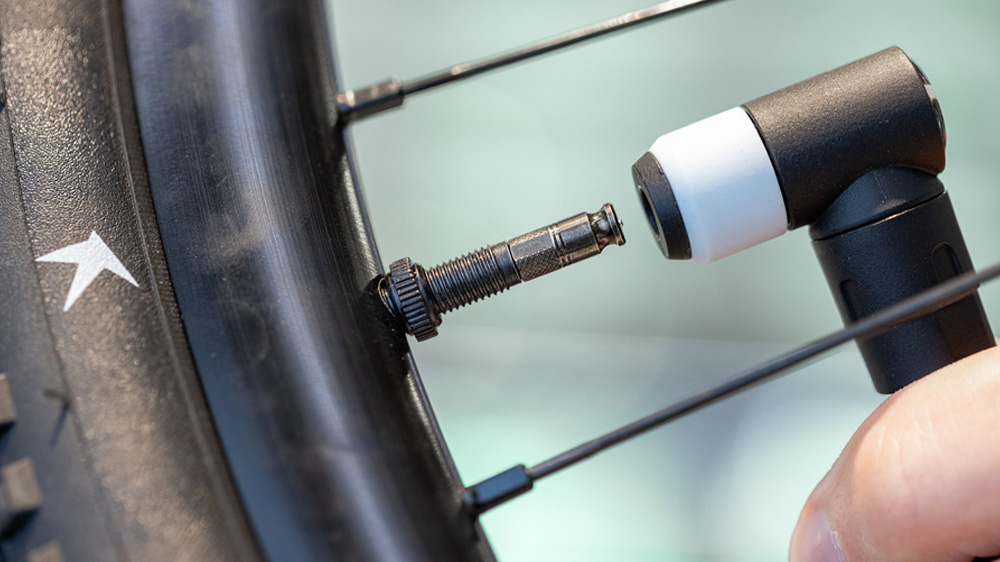
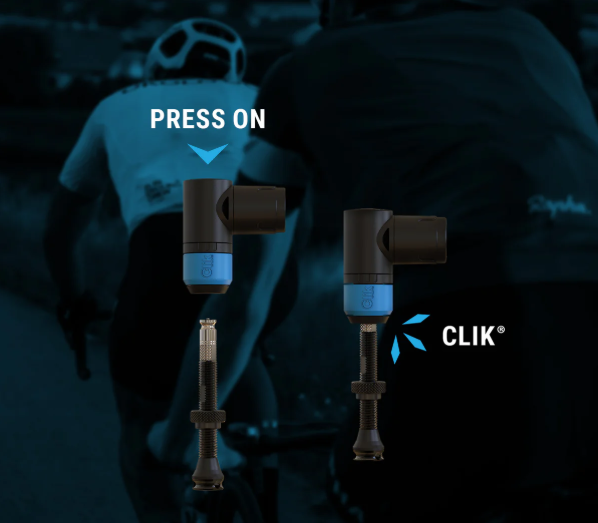
Schwalbe Clik Valve (SCV) is a bicycle valve system that allows you to connect a pump with a single click. There is no need to screw on the pump head or secure it with a lever – simply press it onto the SCV valve until you hear a click.
The SCV system can be adapted for bicycles with Presta (SV), Dunlop (DV), and Schrader (AV) valves, and it can also be used with tubeless tires. But is the Schwalbe Clik Valve really more convenient than conventional bicycle valves, and is it worth switching to? We tested how SCV works in practice.
What is the Schwalbe Clik Valve (SCV)?
Schwalbe Clik Valve, or SCV, is a connection system between a bicycle valve and a pump. Its main purpose is to make inflating tires easier.
With conventional valves, the pump head may need to be screwed on or secured with a lever. If it is attached incorrectly, the connection may leak air or the pump head may slip off. This is particularly inconvenient when wearing gloves or when there is little space around the valve.
With SCV, everything is simpler: the pump head is pressed onto the valve and locks into place with a click. Once you have finished inflating the tire, simply pull the pump head off the valve.
SCV is not a system that necessarily requires you to replace all your existing equipment. Schwalbe offers conversion solutions that make it possible to switch to SCV from the most common bicycle valve types.
SCV, Presta, Schrader and Dunlop – what are the differences?
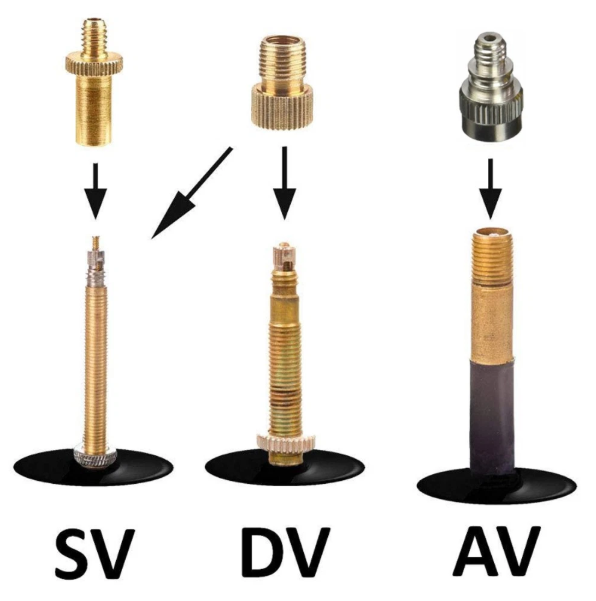
Bicycles most commonly use three main types of valves – Presta, Dunlop, and Schrader. Schwalbe Clik Valve allows these different systems to be adapted for a more convenient pump connection.
| Valve |
Abbreviation |
Where is it most commonly used? |
Conversion to SCV |
| Presta |
SV |
Road, gravel, MTB, and other sport bicycles |
The removable valve core is replaced |
| Dunlop |
DV |
City and touring bicycles |
The valve core is replaced |
| Schrader |
AV |
Bicycles and cars |
An SCV adapter is screwed on |
| Schwalbe Clik Valve |
SCV |
Converted inner tubes and SCV / tubeless systems |
The pump connects with a click |
One of the biggest advantages of SCV if you own several different bicycles is the ability to standardize their inflation system. Instead of using different pump heads or adapters, you can use the same SCV pump connection.
How does the Schwalbe Clik Valve work?
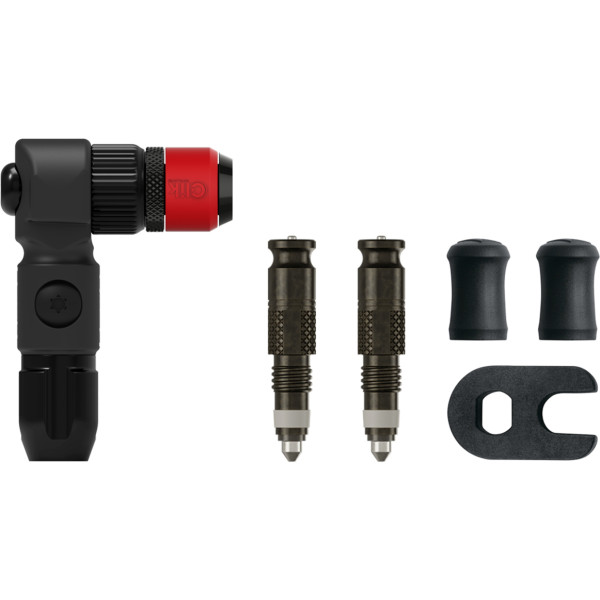
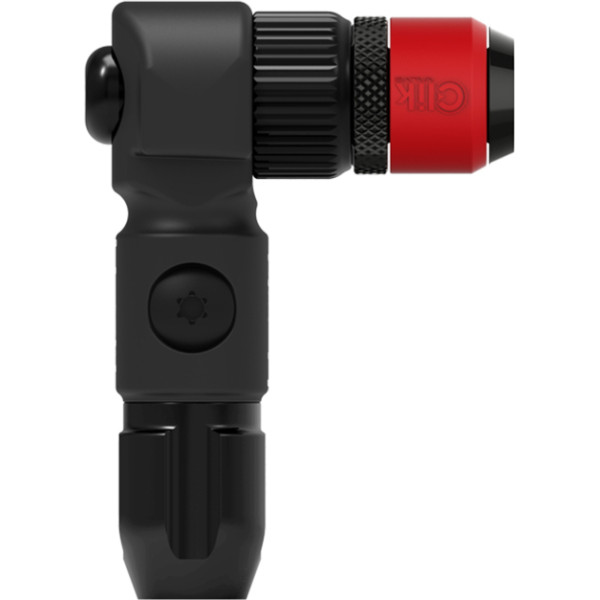
The SCV system consists of two main parts: the SCV valve and a compatible pump head or SCV adapter.
When the pump head is pressed onto the valve, you can hear and feel a click – this means the connection has locked into place. You can then start inflating the tire.
Once you have finished inflating the tire, there is nothing to unscrew or release. The pump head is simply pulled off the valve, and the SCV closes immediately.
This simplicity is the main difference of the system. Connecting and disconnecting the pump takes just one movement, so there is no need to check every time whether the pump head has been screwed on or secured correctly.
How to convert a Presta (SV) valve to SCV?
If you use a Presta (SV) valve, first let the air out of the tire and unscrew the existing valve core. For this, a valve core removal tool is used, which Schwalbe includes with the relevant conversion kit.
The SCV core is then screwed in place of the old core and tightened using the same tool.
Important: only a Presta valve with a removable valve core can be converted in this way. If the core cannot be removed, this type of conversion is not possible.
How to convert a Dunlop (DV) valve to SCV?
Converting a Dunlop (DV) valve is very simple. After letting the air out of the tire, loosen the valve nut, remove the existing core, and screw an SCV core into its place.
The nut only needs to be tightened by hand – no special tool is required for this conversion.
How to convert a Schrader (AV) valve to SCV?
With a Schrader (AV) valve, the conversion is done differently. There is no need to remove the original valve core, and you do not even need to let the air out of the tire.
A special SCV adapter is screwed onto the existing Schrader valve. It can be tightened by hand and removed again later if necessary.
Is the Schwalbe Clik Valve suitable for tubeless tires?
Yes. SCV can also be used with tubeless bicycle tires. Schwalbe offers dedicated SCV tubeless valves, so when using a tubeless system there is no need to convert a conventional inner tube valve.
According to the manufacturer, when used with a tubeless system, SCV can provide up to 50% higher airflow than a conventional Presta (SV) valve. Higher airflow can be particularly useful when installing a tubeless tire, as the tire needs to be filled with air quickly.
Will SCV work with my bicycle pump?
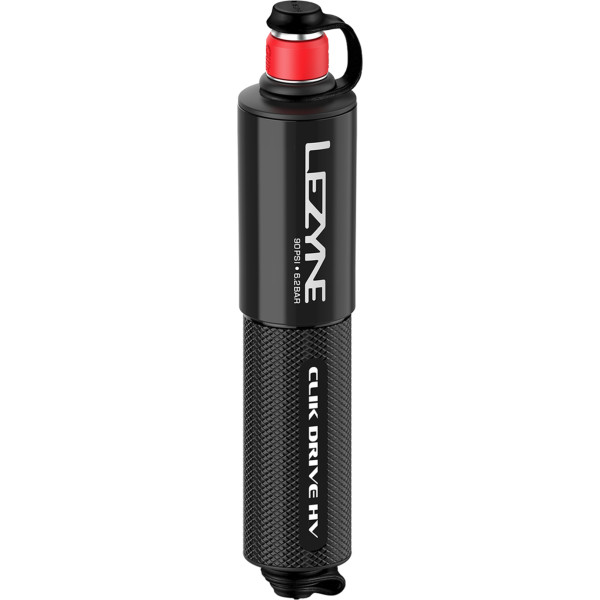
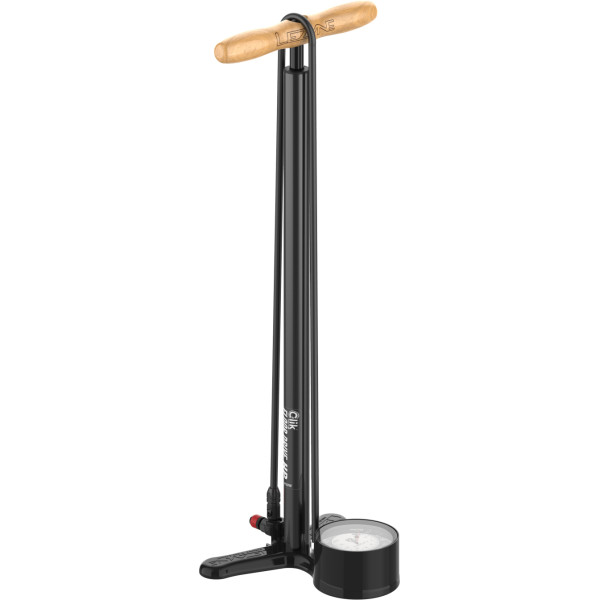
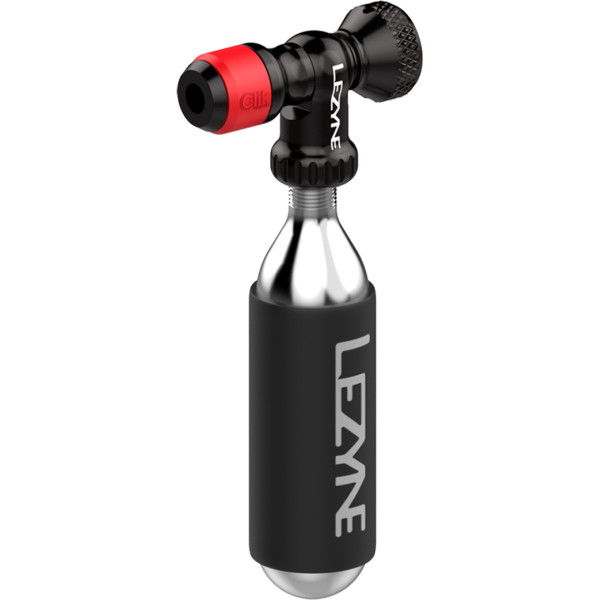
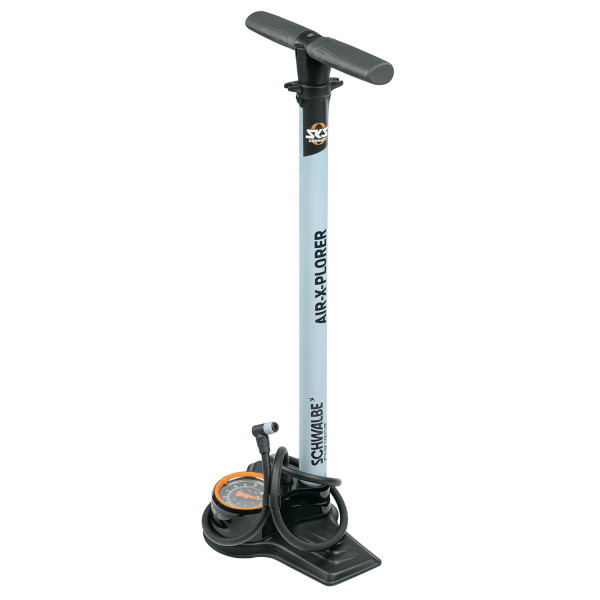
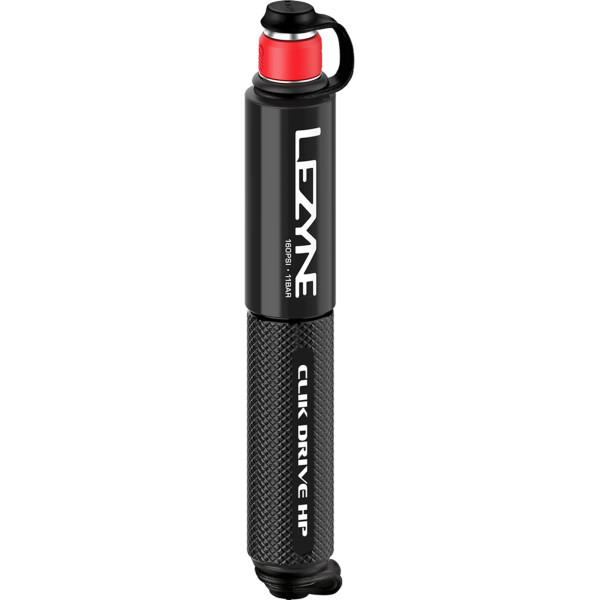
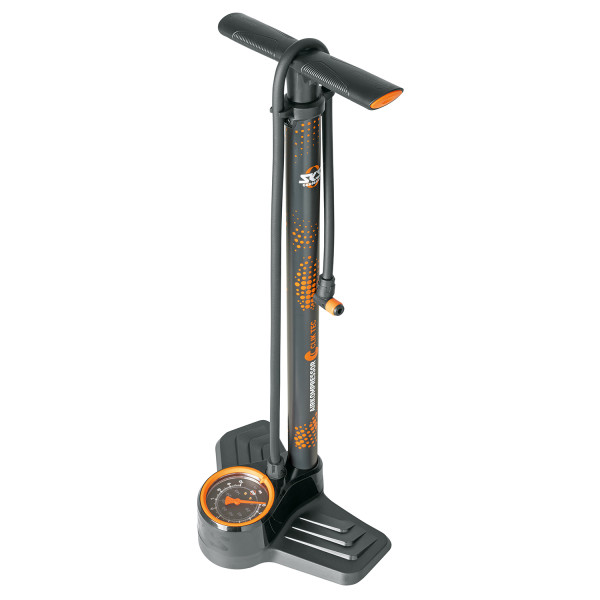
You do not necessarily need to buy a new pump. Many existing pumps can be adapted by using an SCV adapter or by replacing the pump head with a dedicated Schwalbe Clik Valve head.
However, it is worth checking compatibility before converting all your bicycles. Some pumps and pump heads are not suitable for the SCV system – for example, problems may occur with screw-on Presta pump heads.
An SCV valve can also be inflated using a conventional clamp-on Presta or Dunlop pump head. However, accurate pressure measurement may not work in this case, so to take advantage of all the benefits of SCV, it is better to use a compatible pump head or adapter.
SCV test: is the system really easier to use?
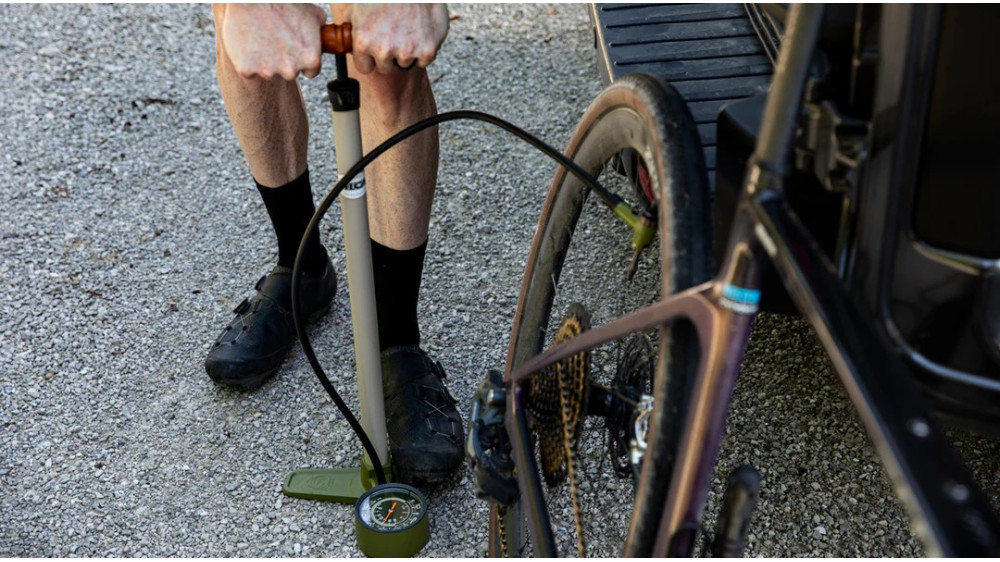
In practice, the biggest advantage of SCV was noticeable as soon as we connected the pump. You simply press the pump head onto the valve – it clicks and locks securely into place. There is no need to twist it, screw it on, or secure it with a lever.
Once you have finished inflating the tire, the pump head can also be removed in a single movement. The SCV valve closes immediately, so we did not notice any significant additional air loss when removing the pump.
A small pressure change when connecting the pump is still possible because some air enters the pump head and hose. This is not caused by the valve itself leaking.
Inflation also seemed slightly easier and faster, but in everyday use the biggest difference is not the airflow itself, but the quick connection and removal of the pump.
Is SCV easy to use?
To test this, we gave the pump to someone who had never inflated a bicycle tire before. After one short demonstration, no further instructions were needed – the pump head locked into place immediately, and the tire was inflated without any difficulty.
The click clearly indicates that the pump is connected correctly. This is particularly convenient when wearing gloves, when your hands are cold, or when the valve is difficult to access.
One less convenient aspect is releasing air. To reduce tire pressure, you need to press the pin in the center of the SCV with your fingernail or another small object. The edge of the valve cap can also be used for this. Compared with Presta, reducing pressure in this way is not as convenient.
Schwalbe Clik Valve (SCV) advantages and disadvantages
SCV advantages
- Quick pump connection. There is no need to screw anything on or secure it with a lever.
- Easy to use. The click indicates that the pump head is properly locked into place.
- Airtight connection. The pump head remains securely in place, and very little air is lost when it is removed.
- Convenient when wearing gloves. There is no need to turn small valve or pump head components.
- Different bicycles can use the same system. You can switch to SCV from Presta, Dunlop, and Schrader systems.
- Suitable for tubeless systems. Dedicated SCV tubeless valves are available.
SCV disadvantages
- Not all pumps are compatible. You may need an SCV adapter or a new pump head.
- Your existing equipment needs to be adapted initially. If you have several bicycles, you may need multiple SCV valves or adapters.
- Not every Presta valve can be converted. A removable valve core is required.
- Releasing air is not as convenient as with a Presta valve.
Is it worth switching to the Schwalbe Clik Valve?
Schwalbe Clik Valve (SCV) does not reinvent bicycle tire inflation, but it noticeably simplifies one of the most inconvenient parts of the process – connecting the pump to the valve.
The biggest advantage of SCV is not just the higher airflow. In everyday use, what matters more is that the pump can be connected and removed quickly, the connection clearly locks into place, and the system can be adapted to bicycles with different valve types.
If you have one bicycle and your existing Presta, Schrader, or Dunlop system does not cause any inconvenience, switching to SCV is not essential. However, if you inflate tires frequently, use a tubeless system, or own several bicycles with different valve types, SCV can be a very practical upgrade.
Before switching to the system, the most important thing is to check which valve you currently use and whether your pump is compatible with SCV. In many cases, there is no need to replace the entire pump – a suitable adapter or pump head is enough. If you decide to try SCV, you can already find Clik pumps, Clik inner tubes, adapters, and other accessories in the Velonova range.

 Gifts
 Discounts