
 Gifts
 Discounts


Updated 2026-10-25
When cycling, your eyes are exposed to wind, dust, insects and changing light conditions. Well-chosen cycling glasses help shield your eyes from these elements, reduce discomfort and provide UV protection. But how do dedicated cycling glasses differ from everyday sunglasses, and which features matter most?
Cycling Glasses – More Than Just an Accessory
2022-04-20
 Viktorija Kaupienė
Why do the shape and construction of cycling glasses matter?
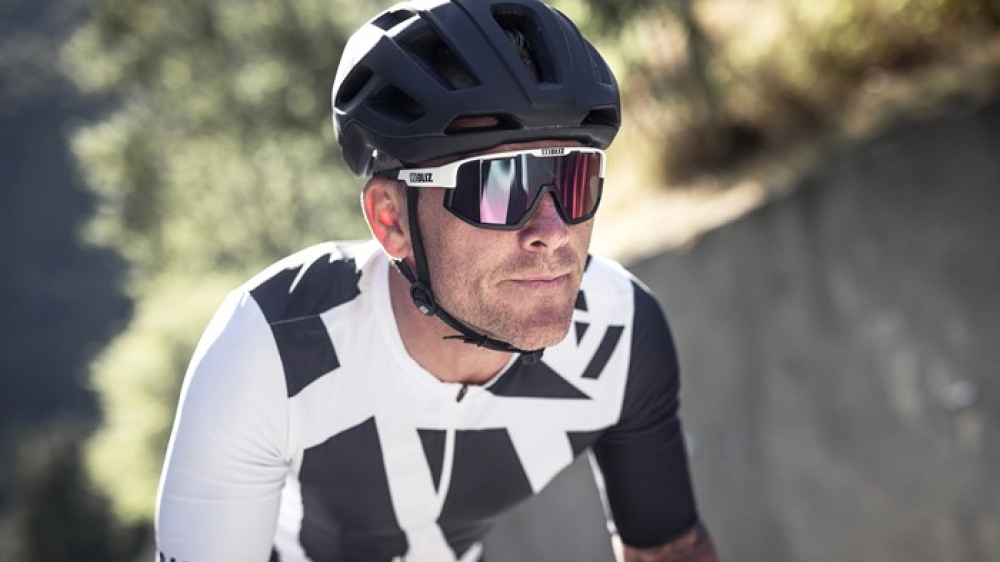
Cycling glasses typically have larger lenses that sit close to the face and provide additional coverage around the sides of the eyes. This helps reduce exposure to wind and the chance of dust or insects getting into your eyes, particularly at higher speeds.
A secure fit is equally important. Lightweight frames, grippy nose pads and temple tips help keep glasses in place, even on rough surfaces. Check that they fit comfortably with your cycling helmet and do not restrict your field of vision.
Many sports glasses use impact-resistant lens materials such as polycarbonate. These are less likely to shatter than more brittle materials, although the level of protection depends on the model's construction and testing. No glasses can completely prevent injuries.
Photochromic cycling glasses – adapting to changing light
Photochromic lenses automatically adjust their tint in response to UV radiation. They darken in bright sunlight and become lighter as UV exposure decreases. This makes them useful on routes that alternate between sunny sections and shade, or when the weather changes during a ride.
However, photochromic lenses do not change tint instantly. Different models also have different light transmission ranges, so it is worth checking which lighting conditions a particular lens is designed for.
Some sports glasses also use contrast-enhancing technologies. For example, Bliz Nordic Light lenses filter selected wavelengths of light to help distinguish details and uneven surfaces. However, contrast-enhancing lenses are not necessarily suitable for every lighting condition – their light transmission also matters.
Which cycling glasses are suitable for riding at night?
When cycling at dusk or after dark, it is important to avoid lenses that unnecessarily darken your view. Clear lenses with high light transmission are generally the most suitable choice. They help shield your eyes from wind, insects and dust while maintaining visibility in low light.
Some photochromic lenses may also be suitable for night riding, but only if their lightest state is designed for these conditions. A lens being photochromic does not automatically make it suitable for riding after dark.
If you regularly ride both during the day and at night, glasses with interchangeable lenses can be a practical option, allowing you to adapt to different lighting conditions.
Prescription cycling glasses – what are the options?
If you normally wear prescription glasses, you do not necessarily have to give up the comfort of dedicated cycling eyewear. Some cycling glasses are compatible with optical inserts – small inner frames fitted with prescription lenses.
Another option is sports glasses with prescription lenses fitted directly into the frame, provided the model's construction and your prescription allow it.
Optical inserts are not universal accessories: they must be compatible with the specific glasses model. Before buying, check compatibility and discuss your prescription lens requirements with an optician.
What should you look for when choosing cycling glasses?
The most important consideration is the conditions in which you usually ride. For sunny routes, choose lenses with an appropriate tint. Photochromic lenses can be useful in changing light, while clear or other high-transmission lenses designed for low-light conditions are better suited to riding after dark.
Comfort, a secure fit, helmet compatibility and adequate UV protection are equally important. Your glasses should not press against your temples, slip down your nose or restrict your field of vision.
Whether you need glasses for commuting, training or longer rides, explore the cycling glasses range at Velonova and compare models by lens type, fit and intended use.
Related Products
Related Posts
Ray-Ban Sunglasses Models: What Are the Differences and How to Choose the Right Pair?
What are the differences between Ray-Ban Mega Wayfarer, Aviator, Clubmaster and other models? Learn how to choose the right frame shape and size, and check the fit before buying...
Bliz Sports Sunglasses: Models, Technologies and How to Choose
Discover Bliz sports sunglasses, including popular Fusion, Matrix, Hero and other models. Explore their differences, lens technologies and key factors to consider when choosing the right pair...

Oakley Sports Sunglasses: Technologies, Models and How to Choose
Discover Oakley sports sunglasses, including popular models such as Sutro, Radar EV, Jawbreaker and more. Explore their differences, PRIZM lens technology and the key factors to consider when choosing the right pair...
Always a clean bottle and fresh water? With Purist Technology, it's possible
As many cyclists know - from time to time, there's an unpleasant aftertaste of water in your drink. What to do? Some people scrub their water bottle with a bottle brush, others blame plastic for the unpleasant aftertaste, and still others look for a new water bottle. What is the real reason for this..

Cyclists' drinks - why do consumers choose plastic?
Today, if you look at the range of drinks for cyclists, you might be surprised to see that plastic drinks dominate. Why do people who choose environmentally friendly means of transport and care about their health choose plastic? After all, plastic is hard to break down and has a long-term negative i..
Bike Accessories – What You Need to Know and How to Choose
Well-chosen bike accessories help improve safety, comfort and convenience on every ride. Discover which accessories are worth having and what to consider when choosing them...