Gifts
Gifts Discounts

(source: https://rinascltabike.com/cycling/benefits/muscles/)
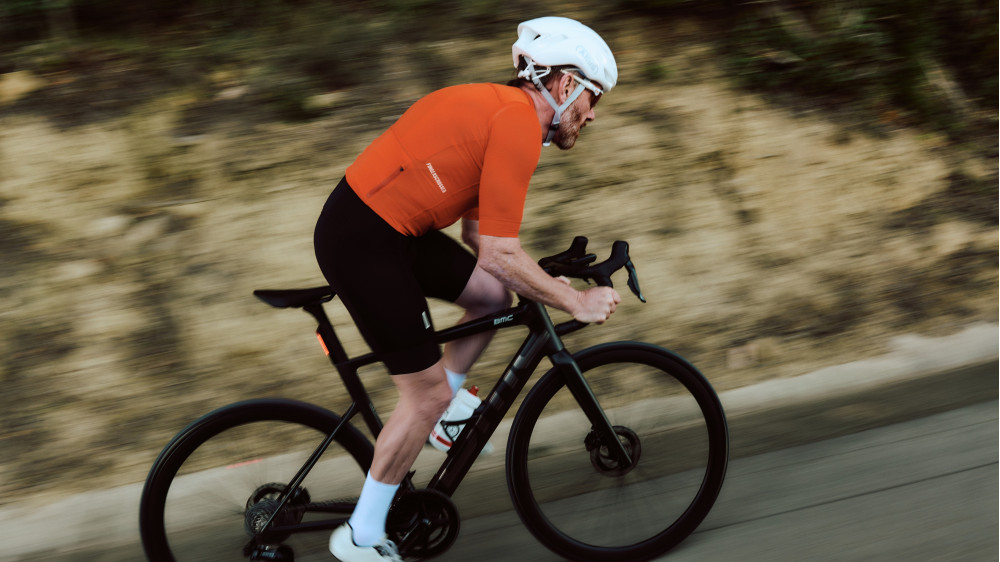
 Vytautas Kaupas
Cycling is often considered a leg workout, but the legs are not the only muscles working while you ride. In fact, it is almost a full-body workout. While your legs propel the bike forwards, your core provides stability, and your shoulder and arm muscles support your body weight and help control the handlebars.
It is also important to remember that the legs are made up of several different muscle groups. Each muscle in the lower body performs a different function, and cycling activates them in different ways.
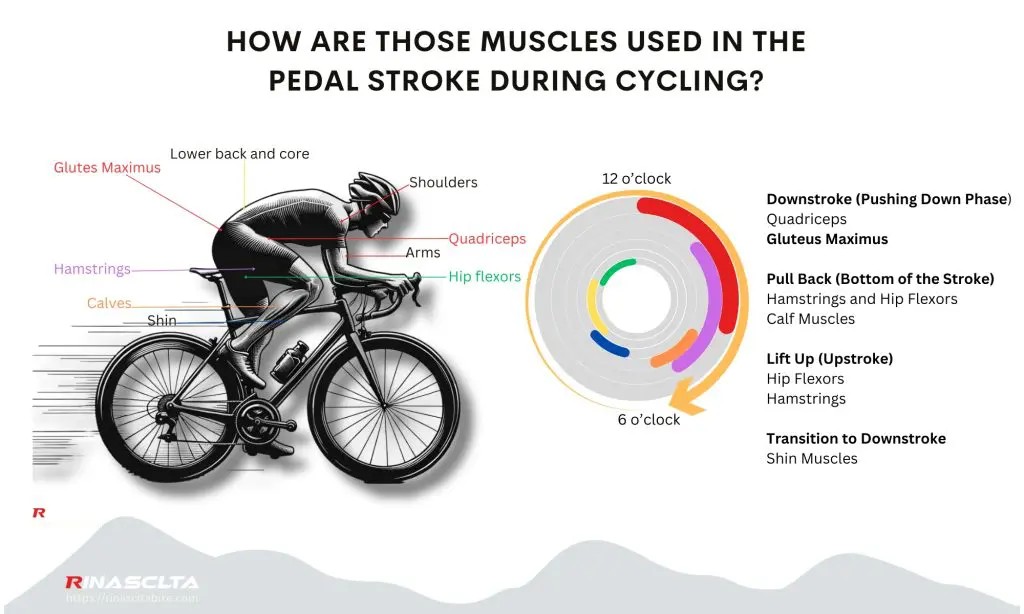
The quadriceps and gluteal muscles are the main power generators, helping push the pedals down, especially when climbing. The muscles at the back of the thighs – the hamstrings – contribute as the pedal rises and the knee bends. Finally, the calf muscles play an important role in controlling foot movement towards the end of the pedal stroke.
Cycling is an excellent way to strengthen your leg muscles. It is also a form of cardio exercise that benefits the cardiovascular system. However, the intensity, speed and duration of your rides depend on what you want to achieve on the bike. Below, we explain what is important to consider when training with a bicycle.
The cycling pedal stroke can be divided into four phases – you can think of them like positions on a clock face.
The power phase is the main part of the pedal stroke, generating the greatest amount of force and placing the most demand on the quadriceps and glutes. During this phase, the leg pushes the pedal down, generating speed and power. If we imagine a clock face, this phase takes place between the 12 and 6 o’clock positions.
During the transition phase, the foot moves slightly backwards and begins to rise. This phase maintains momentum and leads into the upward phase. The calf muscles and hamstrings are active at this point. This phase occurs between approximately the 5 and 7 o’clock positions.
During this phase, the leg moves upwards in preparation for the next pedal cycle. The hamstrings are not heavily loaded during this phase, but they still contribute to the movement. This phase lasts from approximately the 7 to 10 o’clock positions.
The leg has almost completed the pedal cycle and is preparing to begin a new one. The tibialis anterior muscle at the front of the lower leg helps smoothly complete this phase, while the quadriceps prepare for the next load. This transition phase occurs between approximately the 10 and 12 o’clock positions.
Training the gluteal muscles is important not only for appearance, but also for overall health, better posture and freedom of movement. We often forget that strengthening one muscle group can also benefit other parts of the body. So let’s look at why strengthening the glutes is so important for the entire musculoskeletal system.
Weak gluteal muscles can shift more load onto the lower back, which may contribute to lower-back discomfort. This connection is not always obvious, so many people may not realise that back problems cannot always be addressed through back stretching exercises alone.
Strong gluteal muscles also help maintain proper hip alignment while standing, walking and running. More stable joints may also help reduce the risk of knee pain and injuries.
Our stance and posture can also improve when the gluteal muscles are strengthened. If you want to maintain an upright body position and reduce the likelihood of back discomfort later in life, cycling can be a very useful activity.
It should perhaps come as no surprise that the part of the body responsible for driving us forwards has such an important effect on overall movement, especially when we are talking about the largest muscle in the body – the gluteus maximus.
Leg muscles are not the only muscles involved in cycling. Cycling is one of the most versatile ways to strengthen the whole body. While training and strengthening your legs, you also engage your abdominal and core muscles, arms and shoulders.
A strong core provides stability while riding, reduces unnecessary movement and helps conserve energy. While the legs turn the pedals, the core stabilises the hips and prevents excessive movement. This means more energy can be directed towards the most important action – pedalling.
A weak core can also contribute to greater fatigue while cycling, because the body has to use more energy simply to keep you stable.
Another important part of the body involved in cycling is the arms and shoulders. They help control the handlebars, absorb impacts from uneven road surfaces and maintain overall balance. Relaxed, slightly bent arms can also help reduce strain on the neck and shoulders.
Cycling engages a variety of muscle groups and helps strengthen them together, contributing to better muscular balance and overall wellbeing.
What actually happens to your leg muscles when you cycle? Do they grow, or do your legs simply become more toned? The answer depends on how you ride.
Cycling strengthens muscles, but it does not necessarily make them significantly larger. If you prefer steady, longer rides, you will undoubtedly strengthen your muscles, improve endurance and develop muscle tone. However, if your goal is to build muscle mass, regular cycling alone may not be enough.
Muscle growth requires resistance training, such as riding uphill or simply training at higher intensity. Even so, cycling is not the most efficient way to build muscle mass, so it is best combined with strength training. Put simply, building muscle through cycling alone will generally take longer than with traditional weight training.
In summary, cycling is excellent for weight management and improving muscle tone, but building significant muscle may require additional and more intensive strength work.
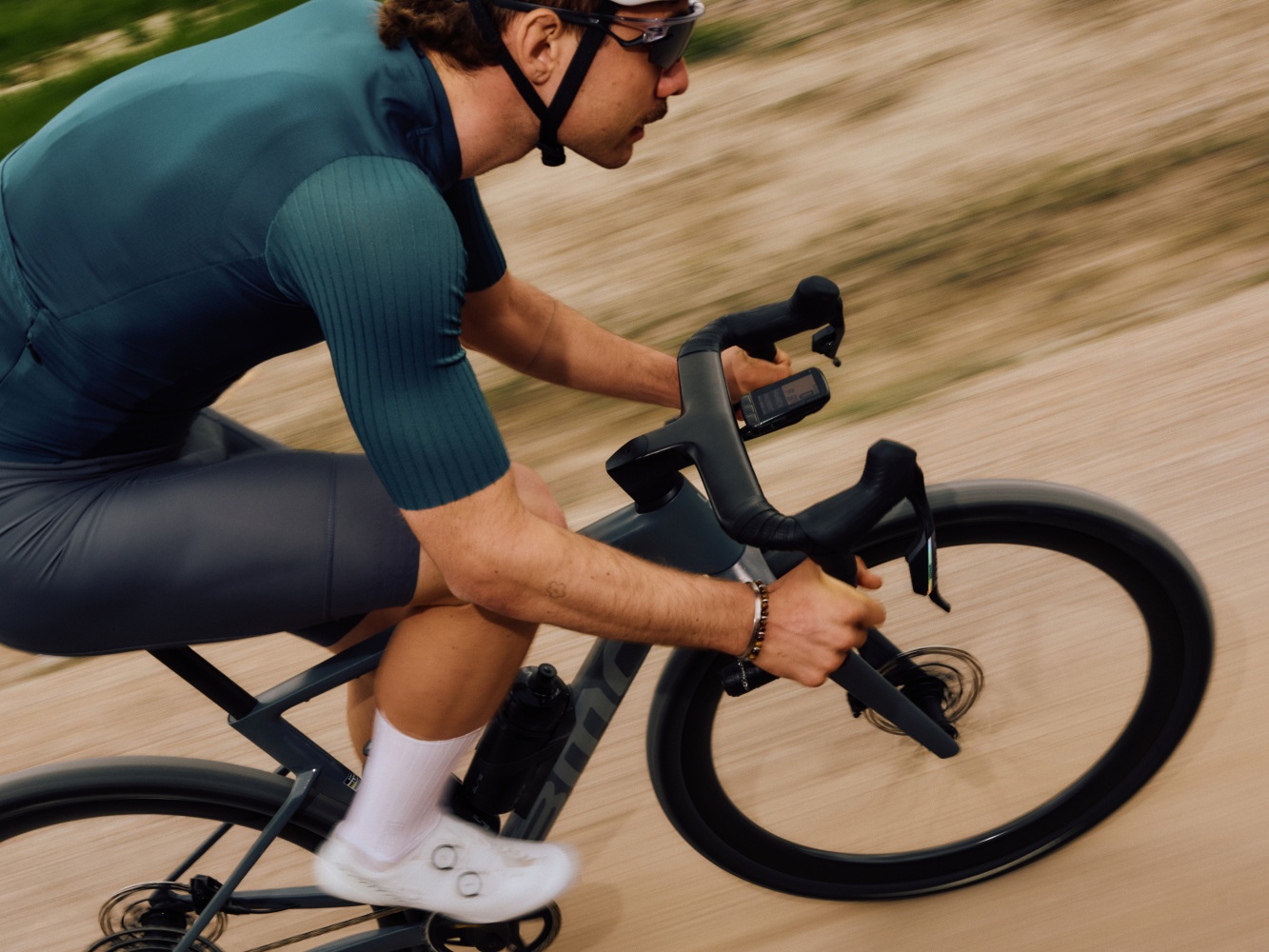
Your muscles work regardless of what type of bicycle you ride. However, different bike types usually mean different terrain, which affects stability and how much different muscle groups are engaged.
Road cycling builds endurance, but smooth, stable and relatively predictable surfaces allow the legs to do most of the work without requiring as much involvement from the core, arms or upper body.
Riding over uneven terrain means that not only the leg muscles but also the stabilising core muscles are engaged. When riding on gravel or other rough surfaces, the arms and shoulders also have more work to do because the rider must absorb impacts and react to larger irregularities. As a result, gravel riding engages much more of the body.
Mountain biking requires more time standing on the pedals, accelerating, braking, shifting body weight and responding to technical terrain. Of all cycling disciplines, mountain bike trails require some of the greatest full-body involvement. On hilly and mountainous terrain, not only the legs but also the abdominal, shoulder and arm muscles work hard, making MTB riding feel much more like a full-body workout.
The effect of an electric bike on your muscles depends on how much assistance you use while riding. In general, the same muscles are engaged as when riding a conventional bicycle, but less force may be required, so endurance and muscle strength may develop more slowly.
However, using electric assistance on climbs can allow you to ride for longer periods. A relaxed two-hour e-bike ride may provide as much – or in some cases even more – overall activity than a more intense 45-minute ride on a conventional bicycle.
A correct cycling position is important not only for comfort, but also for pedalling efficiency. A properly adjusted saddle allows the major leg muscles, including the glutes and hamstrings, to produce power more efficiently through the pedal stroke, helping improve pedalling performance and riding speed.
An incorrect riding position can also place additional stress on the knees, joints and back, potentially contributing to chronic discomfort or a higher risk of injury. When the body uses energy not only to pedal but also to maintain an unnatural position of the back, arms and legs, fatigue can occur more quickly.
When adjusting your bike, do not forget the handlebar position. Proper weight distribution between the saddle and handlebars helps maintain stable handling and reduce hand numbness during longer rides.
What does a proper cycling position look like? Your legs should remain slightly bent – approximately 25–30 degrees – when the pedal is at the bottom of the stroke. You should also avoid excessive rounding of the back: the spine should maintain its natural curve, while the core muscles remain engaged to reduce unnecessary load on the arms.
Strength training is important because it helps the body cope more effectively with the repetitive load of cycling and may help reduce joint and back discomfort.
A couple of times per week, perform exercises that activate the gluteal and core muscles. Squats, with or without weights, are among the most useful exercises for cyclists. To strengthen the core, bodyweight endurance exercises such as planks can also be effective.
Make sure that exercises are performed with proper technique and that you do not experience back or knee pain. If you are unsure how to use strength training effectively, consult a qualified specialist, doctor or professional trainer.
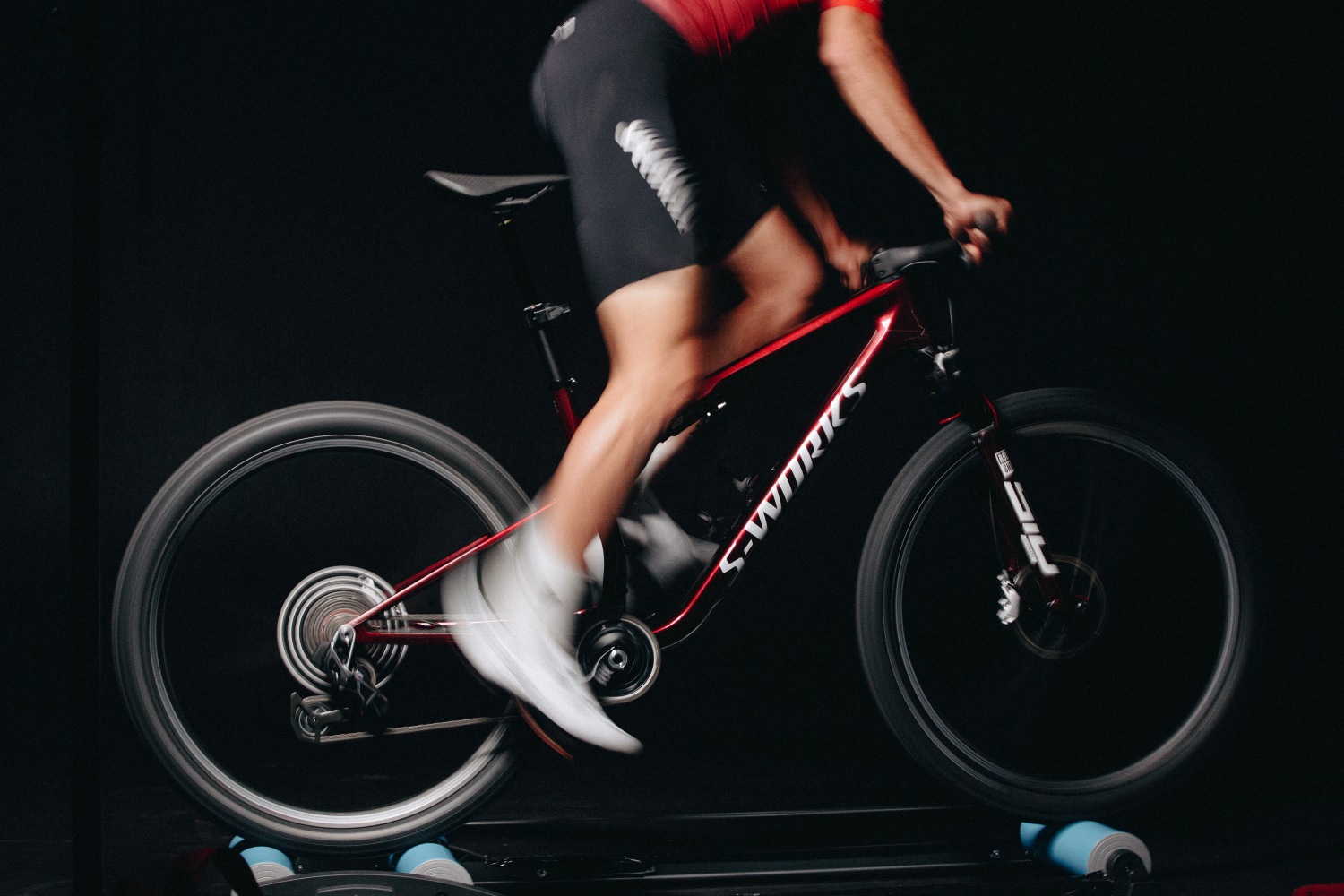
Depending on riding intensity, you may begin to notice stronger muscles and improved endurance after just a few weeks of regular cycling.
Stretching is not essential after every ride, but if your muscles feel tight, 5–10 minutes of gentle stretching may help improve flexibility, relax the muscles and reduce stiffness, especially after a longer cycling session.
Cycling can contribute to muscle imbalances because of repetitive movement patterns and the fixed seated position. To help reduce the risk of muscle imbalance, it is recommended to include regular stretching and additional strength training.
Cycling offers clear benefits for people of all fitness levels. It can support cardiovascular health, improve endurance and strengthen the body’s muscles. A better understanding of how your body and muscles work while cycling can help you train more effectively, choose the right type of bike and get more out of the sport.
If you are planning to take cycling more seriously, consider the different types of bicycles available and your own goals. Depending on where and how you intend to ride, the demands placed on your muscles will vary. Whether you want to focus mainly on strengthening your legs or involve more of the whole body, you can find a bike and riding style that suits your needs.
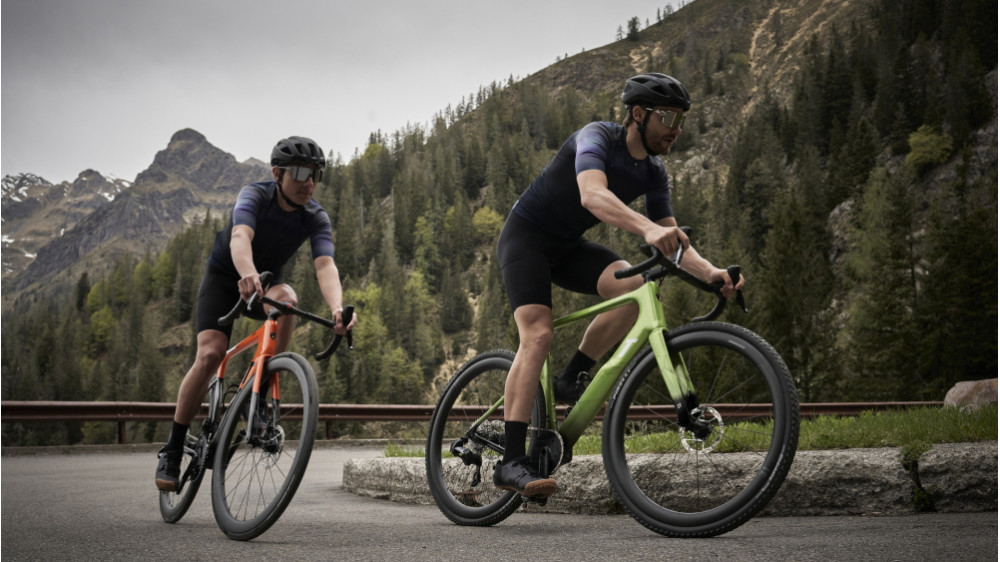
Cycling - the most important aspects
Cycling is the most versatile sport that can be taken up by people with no physical fitness at all. However, for both professional and novice cyclists, correct riding is crucial to their health, starting with sitting correctly...
-1000x562.jpg "What is the Retül test? How to get the most out of cycling?")
What is the Retül test? How to get the most out of cycling?
The Retül test uses digital technology to help the seating specialist adapt the bike to your body's capabilities and your needs. Using special sensors, your movement patterns will be evaluated to the millimeter and a seating position will be selected so that your body and the bike work together inst..
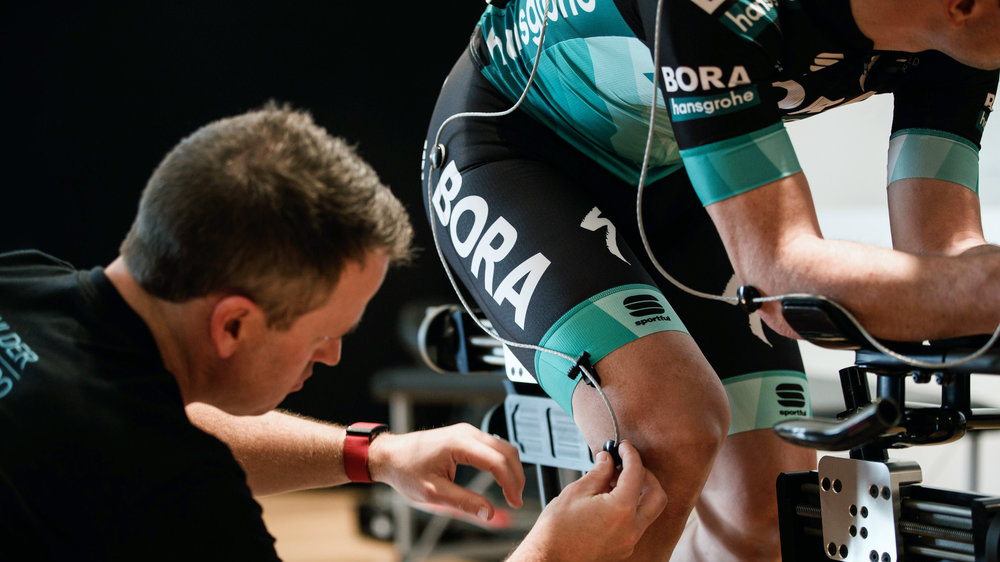
Chronic injuries in cyclists - get a seating adjustment to avoid them
Today, cycling is far less likely to cause injury and ill health than it was a few decades ago. Braking systems have improved, lights, reflectors and reflective vests increase visibility on the road, helmets help prevent head injuries, special cycling goggles protect the eyes from stimuli, and knee,..
This website uses cookies to improve user experience. By using our website you consent to all cookies in accordance with our Cookie Policy. Read more